
English


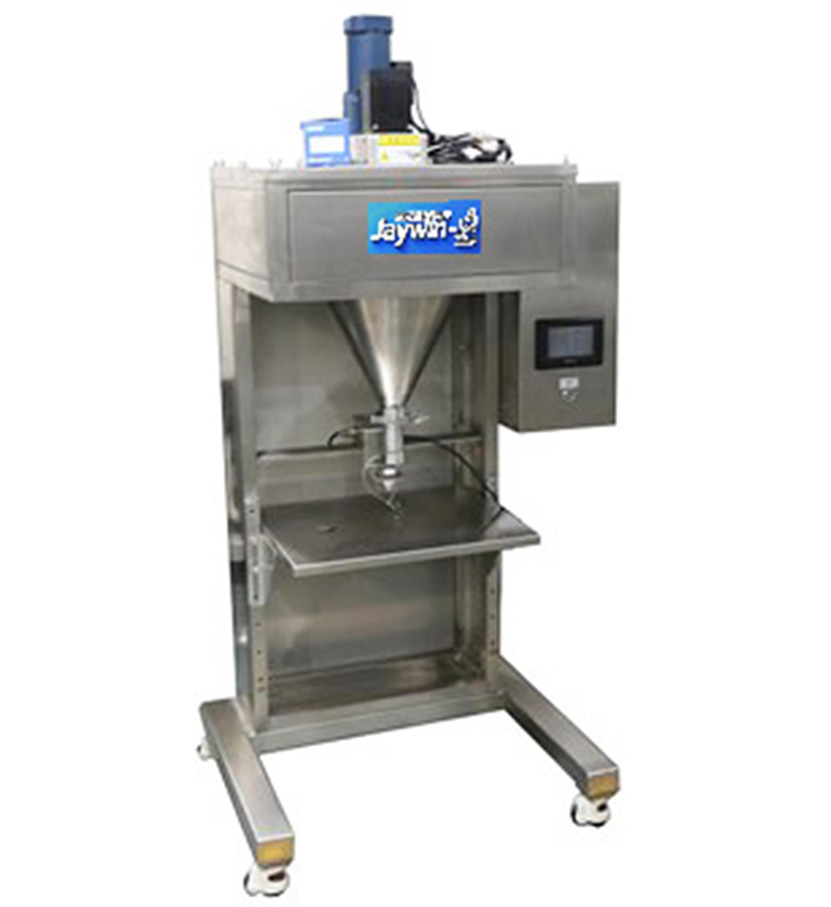


Adopting advanced vibration technology, the Industrial Vibrating Screen Machine creates a complex 3D vibration path that ensures thorough particle separation based on size. Its sealed structure avoids dust release, making it suitable for environments with strict hygiene demands—such as cosmetic, pharmaceutical, and food processing facilities. Built with high-quality SUS304 stainless steel, the machine offers superior corrosion resistance and long service life, meeting the strict requirements of GMP-compliant production sites. With a production capacity ranging from 35 to 60 kg per hour, it provides an efficient solution for large-scale powder screening operations.
Parameter | Specification |
Power Supply | 380V/50Hz |
Total Power | 0.55KW |
Dimension (L×W×H) | 680×500×1000MM |
Production Capacity | 35-60kg/hour |
Screen Diameter | Φ400 MM |
Screen Mesh | 40 mesh (replaceable) |
Machine Material | SUS304 Stainless Steel |
Net Weight | Approximately 60 KG |
Vibration Type | Complex spatial trajectory |
Through its vibration actuator, the machine produces a complex spatial vibration path—with a circular horizontal projection and elliptical vertical projections. This multi-dimensional movement ensures full dispersion and screening of powder materials, achieving a high screening efficiency of 35 to 60 kg per hour.
It is fitted with a standard 40-mesh screen that can be easily replaced. Users can install screens of different mesh sizes based on specific production needs, providing flexibility for various material processing tasks.
Made fully of SUS304 stainless steel, the machine complies with rigorous hygiene criteria. This makes it ideal for material processing in the pharmaceutical, cosmetic, and food sectors—where contamination control is critical.
The sealed structure blocks dust leakage during the screening procedure, sustaining a clean workplace environment and shielding operators from potential health risks linked to powder inhalation.
With a compact design (680×500×1000 mm) and lightweight build (60 kg), the machine is simple to install and needs little maintenance. Its streamlined structure allows for fast disassembly and cleaning, lowering downtime.
Used for screening semi-finished cosmetic powders like foundation, blush, and eyeshadow. It guarantees uniform particle size and eliminates agglomerations, enhancing product texture and quality.
Ideal for screening pharmaceutical powders and granules. It ensures adherence to particle size standards and boosts the uniformity of pharmaceutical formulations in pharmaceutical production.
Suitable for screening food additives, seasonings, and powdered components. It secures product quality and consistency in food processing applications where particle size control is essential.
Applied in the chemical industry to classify various grades of powder materials (including pigments, dyes, and fillers). This enhances product purity and performance in industrial use cases.
The machine has a production capacity of 35-60kg/hour, which can be adjusted by controlling the vibration intensity and feeding rate according to material characteristics.
Yes, the standard 40 mesh screen is replaceable. Users can install screens with different mesh sizes (available upon request) to achieve the desired particle size separation for specific applications.
Absolutely. The machine is constructed with SUS304 stainless steel, which is a food-grade and pharmaceutical-grade material, and features a dust-free enclosed structure, making it compliant with strict safety and hygiene standards.
The complex three-dimensional vibration trajectory (circular in horizontal projection, elliptical in vertical projections) ensures that all particles come into contact with the screen surface, preventing blind spots and ensuring uniform screening results.
Regular maintenance includes checking the vibration motor for proper operation, inspecting and cleaning the screen to prevent clogging, and ensuring all connections are secure. The stainless steel surfaces should be cleaned regularly to maintain hygiene standards.


