
English


Views: 0 Author: Site Editor Publish Time: 2026-08-27 Origin: Site


Traditional manual top labeling relies on operator estimation and rigid mechanical jigs. Delicate cosmetic packaging, such as powder compacts and air cushion containers, often suffers from severe alignment errors due to slight surface variations. Visual positioning systems transform this manual workflow completely. High-resolution cameras capture precise optical data to verify container coordinates in real time. This optical verification replaces subjective operator placement with digital accuracy, eliminating positioning guesswork during daily packaging tasks. Consequently, integrating vision guidance into manual top labeling equipment dramatically boosts overall placement accuracy, reduces costly material waste, and bridges the operational gap between manual labor and full automation.
Camera systems guide workers to place labels with precision.
Diffused lighting removes glare on reflective plastic and metallic containers.
Digital optical verification stops scratches by eliminating physical mechanical stops.
Smart visual feedback cuts packaging scrap and boosts daily factory output.
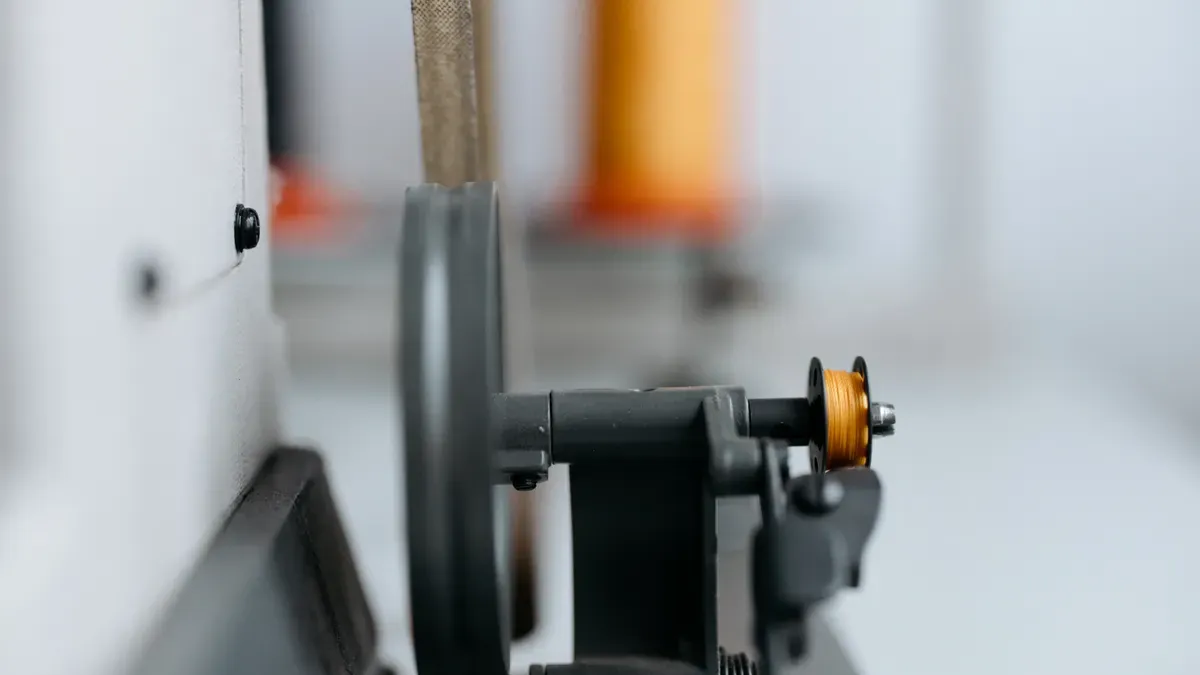
Image Source: pexels
Visual positioning systems inspect cosmetic packaging components before an adhesive label touches the substrate surface. High-resolution area-scan cameras capture target images to establish precise feature coordinates and surface orientation. The imaging setup uses strobed LED lighting to suppress glare on reflective foil containers. Low-distortion optics isolate key registration marks and background boundaries effectively.
The image analysis software determines target orientation using a structured pattern-matching process:
Pattern-search algorithms compress both the reference pattern and search image to lower computational overhead.
The system executes a coarse search by sliding the pattern window across the search field and rotating the window to detect angular deviation.
A secondary search narrows the localized target region using a less-compressed pattern model.
The final search analyzes non-compressed image data using sub-pixel processing to extract exact surface coordinates and part orientation.
Once image processing completes, the system calculates exact positional offsets. The software measures linear errors along X and Y axes alongside the rotational deviation angle θ. The vision controller instantly transmits these alignment values to the machine controller. This dynamic feedback loop provides precise positioning guidance without manual operator estimation.
Vision technology eliminates position variations caused by worn mechanical stops. Fixed mechanical guides often scratch delicate powder compacts and air cushion shells. Digital optical verification removes physical contact during part alignment. The vision software maintains strict accuracy without requiring physical tool adjustments between production batches.
| System Feature | Technical Specification | | Lens Configuration | Low-distortion optics with diffused LED lighting | | Camera Resolution | Selectable line-scan resolution up to 8k | | Operational Capacity | Supports web widths up to 1 meter at speeds up to 100 m/min |
Digital coordinate tracking ensures reliable label registration on complex container shapes.
Image Source: pexels
Luxury cosmetic packaging demands flawless visual presentation alongside regulatory compliance. Compact lids, air cushion containers, mascara caps, and lipstick plates often feature reflective metallic foils, curved contours, or shallow recessed centers. Traditional mechanical jigs fail on these surfaces because physical stops scratch delicate coatings or misalign labels on slight curvature variations. Visual positioning systems solve these issues by eliminating mechanical contact. Advanced optical cameras detect subtle design features beneath surface reflection, guiding manual operators to place top labels with perfect symmetry.
Top labeling on premium air cushion boxes, mascara caps, and compact lids must satisfy strict aesthetic standards and international regulatory mandates. Clear text legibility remains critical for consumer safety and legal compliance. Cosmetics manufacturers format printed text carefully to meet minimum physical height dimensions based on overall package surface area.
Aspect | Specification for Air Cushion Boxes and Compact Lids |
|---|---|
Standard Type Size | Use at least 1/16 inch letter height on standard cosmetic package surfaces. |
Small Package Type Size | Use at least 1/32 inch letter height on packages smaller than 12 square inches. |
Ingredient Nomenclature | Standardized INCI names must list ingredients in decreasing order of predominance. |
Alignment Accuracy | Optical guidance ensures label borders align symmetrically with outer container edges. |
Vision cameras inspect container placement on manual top labeling stations before label application. The camera recognizes registration marks on curved or recessed lids. The system verifies that text panels sit horizontally without tilt. This optical verification guarantees that critical consumer information stays readable without distorting small font sizes.
High-quality packaging equipment forms the foundation of precise top labeling. Production lines utilizing equipment from Jaywin Machinery produce uniform containers that optimize vision inspection performance. For instance, the Single-color cosmetic air cushion BB cream filling and injection integrated machine fills air cushion boxes with high structural consistency. Uniform container dimensions allow vision systems to locate reference points quickly during subsequent manual top labeling tasks.
Similarly, the Multi-color lipstick plate cosmetic paste heating filling machine delivers precisely molded palettes and compact bases. These filled containers move to manual labeling stations where vision technology assists operators. Multi-color palette lids often feature narrow borders around clear viewing windows. Vision software identifies window perimeters instantly and calculates exact target placement. Operators position top labels over multi-color plates accurately, avoiding offset errors.
Integrating optical positioning across Jaywin Machinery production lines bridges manual assembly and automated quality standards seamlessly. Specialized LED lighting arrays neutralize heavy glare on gold, silver, and high-gloss plastic finishes. The imaging software processes surface features within milliseconds. Operators receive instant visual alignment cues, allowing fast manual placement without trial-and-error adjustment. This streamlined workflow eliminates cosmetic defects on luxury packaging lines while maintaining high daily throughput.
AI-assisted visual positioning and quality inspection technology improves label placement accuracy by nearly 25%. Traditional manual top labeling processes frequently produce offset labels, slanted brand logos, and unsightly air bubbles on smooth container lids. Manufacturing facilities must discard misaligned packaging or instruct operators to peel off misplaced labels by hand. Modern visual positioning systems guide equipment operators through direct video feedback. The camera system identifies edge contours instantly, ensuring precise alignment before an adhesive label contacts the container surface during daily packaging cycles.
Cleanroom operations under Good Manufacturing Practice (GMP) compliance guidelines enforce strict waste controls, hygienic protocols, and low defect limits. Faulty label application forces cosmetic companies to scrap expensive custom compacts, metallic decorative foils, and pre-filled cream formulations. Eliminating placement errors preserves pristine package surfaces and avoids costly product re-work inside regulated facilities. Manual reworking risks scratching delicate container coatings and introducing dust into open cosmetic pans. Consequently, cosmetics manufacturers reduce raw material scrap, protect delicate formulas against repeated handling, and improve overall factory profitability over long production runs.
Manual top labeling workflows lose speed when operators spend extra time aligning irregular cosmetic containers against physical mechanical stops. Workers hesitate continuously during manual placement because they want to avoid costly alignment mistakes on premium lipstick plates, mascara caps, or air cushion lids. Optical vision guidance eliminates this operational bottleneck completely. High-resolution optical cameras process container surface orientation instantly, offering operators direct visual alignment cues on target monitors throughout manual feeding cycles.
Operators position incoming containers smoothly onto labeling stations without second-guessing alignment angles or making tedious trial-and-error adjustments. Fast visual confirmation removes operator hesitation, accelerates repetitive manual movements, and maximizes total output for every shift. Maintaining continuous motion reduces operator physical fatigue while upholding strict placement accuracy standards during high-volume production runs. Therefore, cosmetic factories optimize daily output performance while retaining the operating flexibility of manual packaging stations.
Retrofitting manual top labeling stations requires precise hardware positioning to capture clean packaging images. Technicians mount high-resolution cameras directly above the manual labeling area on rigid vertical frames. Engineers select low-distortion prime lenses to preserve linear container dimensions across the entire field of view.
Glossy cosmetic compacts and metallic packaging surfaces create harsh reflections. Technicians choose specialized lighting configurations to control specular glare and preserve label edge visibility during optical inspection.
Configuration | Key Action | Label-Alignment Benefit |
|---|---|---|
Single large diffused source | Use a large diffusion panel as the main light source | Prevents bright hotspots from obscuring label edges |
45-degree key light with fill | Place diffused light at 45 degrees with a white side card | Keeps the label plane evenly lit without blowout |
Broad front light with subtle fill | Combine broad front lighting with side fill light | Keeps brand text and alignment marks readable |
Avoid ring lights | Replace un-diffused ring lights with rectangular diffused panels | Stops circular reflections from crossing alignment marks |
Diffused illumination eliminates glare on curved lipstick lids and mirror-finished compacts. Technicians position light sources close to the target area, expanding the relative light size for uniform coverage.
Visual positioning systems require systematic calibration to align raw camera pixels with physical machine coordinates. Technicians place a high-precision grid target onto the labeling plane. The vision software analyzes grid intersections to compute optical distortion coefficients and establish spatial scaling parameters.
Mount the reference calibration target flat on the manual labeling surface.
Execute spatial calibration algorithms to convert camera pixels into physical millimeter units.
Train pattern recognition software using clean, un-labeled cosmetic container samples.
Define strict tolerance thresholds for coordinate offsets along X, Y, and rotational axes.
After spatial calibration, engineers configure inspection search windows around primary packaging features. The vision software stores master optical templates for every container model. During daily production runs, the optical software compares live camera feeds against stored templates in real time. The vision system transmits instant alignment cues to visual monitors, guiding manual operators toward perfect label placement without physical mechanical stops.
Integrating visual positioning systems transforms standard manual top labeling machinery into high-precision, low-waste packaging workstations. Advanced optical camera verification eliminates manual alignment guesswork, drastically reduces material scrap rates, and protects delicate cosmetic container surfaces against physical scratching. Guangzhou Jaywin Machinery Co., Ltd. maintains a firm commitment to delivering high-quality cosmetic machinery solutions. Jaywin Machinery continuously designs specialized equipment that enhances overall production efficiency and product quality for cosmetics manufacturers worldwide. Production managers should audit their top labeling placement accuracy today. The experienced engineering team provides comprehensive technical guidance. Contact Jaywin Machinery to request customized packaging equipment solutions for your manufacturing facility.
Visual positioning technology improves label placement accuracy by nearly 25%. High-resolution cameras detect container edge contours instantly. The system guides operators with real-time video feedback, preventing off-center labels and costly material scrap during manual packaging workflows.
Yes. Specialized diffused LED lighting arrays neutralize glare on gold, silver, and mirror-finished plastic containers. Low-distortion optical lenses isolate reference marks on reflective compact lids and lipstick plates. This allows software algorithms to process target surface orientation without physical contact.
Jaywin Machinery cosmetic filling equipment creates precise, structurally uniform containers. Machinery like the single-color air cushion BB cream filling machine produces consistent package dimensions. These identical shapes allow optical cameras to locate alignment coordinates quickly during subsequent manual top labeling tasks.
Technicians place a high-precision grid target onto the labeling plane. The vision software converts raw camera pixels into physical millimeter units. The system defines strict coordinate tolerance thresholds along X, Y, and rotational angle θ axes to maintain exact digital registration.


