
English


Views: 0 Author: Site Editor Publish Time: 2026-09-24 Origin: Site


Nail polish manufacturers face mounting regulatory pressure. FDA inspections, EU Cosmetics Regulation requirements, and cGMP expectations demand verifiable hygiene at every production stage. A single recall or batch failure can cost millions and damage brand trust permanently.
High-cleanliness design in Fully Automatic Nail Polish Filling Machines directly reduces these compliance risks. These systems prevent microbial and particulate contamination, eliminate cross-contamination between batches, and enable reproducible clean-in-place procedures.
Manual filling and poorly designed equipment create crevices, residue buildup, and inconsistent cleaning. Auditors flag these conditions repeatedly. Fully Automatic Nail Polish Filling Machines with hygienic construction turn compliance into a proactive strategy. This approach protects production integrity and reduces long-term regulatory exposure.
High-cleanliness design reduces contamination risks and helps you pass FDA and EU audits.
Automated cleaning systems like CIP and SIP remove human error and make cleaning reproducible.
Smooth stainless steel surfaces and zero-dead-leg piping prevent bacterial growth and cross-contamination.
Automatic data logging creates audit-ready records and cuts batch record closure from days to hours.
Investing in hygienic filling machines lowers long-term costs by avoiding recalls and speeding up changeovers.
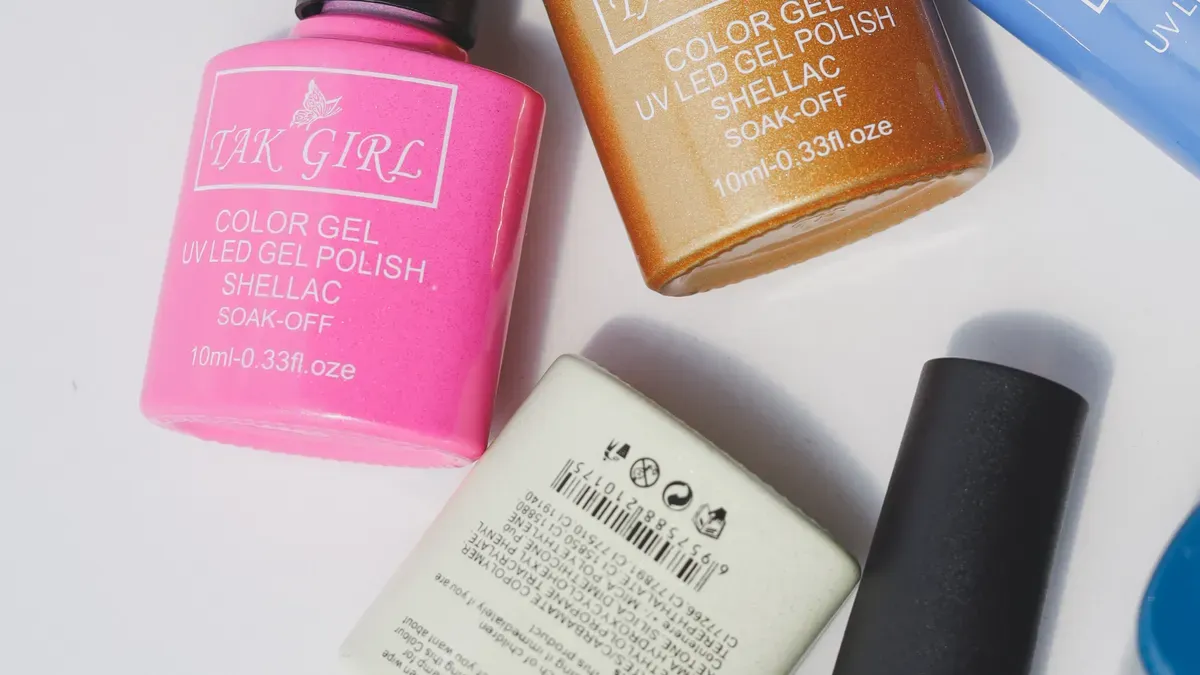
Image Source: pexels
Nail polish formulations contain volatile solvents and organic compounds. When moisture intrudes during the filling process, these solvents can support microbial growth. A contaminated batch requires complete disposal and triggers regulatory investigation. Particulate contamination from moving parts represents another frequent audit finding. Worn seals, degraded gaskets, and poorly maintained pumps shed particles directly into the product stream. These particles become embedded in the formulation, causing visible defects and customer complaints.
Residue buildup in threads, crevices, and dead legs creates a serious cross-contamination risk. These areas trap product during filling cycles. During changeovers between colors or formulations, residual product accumulates in these inaccessible locations. When a new color enters the line, old residue mixes with fresh formulation. Visual inspection alone cannot detect this hidden contamination. The result is color variation, compromised product integrity, and failed quality checks. Regulators specifically flag dead-leg piping and threaded connections during inspections because they provide harborage points for contamination.
Manual filling introduces inherent variability that undermines compliance efforts. Operators perform cleaning and filling tasks differently each time. Critical variables such as applied cleaning pressure, scrubbing technique, scrubbing duration, and drying time differ between technicians and between shifts. FDA investigators view manual cleaning processes with documented skepticism. They expect standard operating procedures to eliminate technician-dependent inconsistency entirely. cGMP guidelines under 21 CFR Part 211 and EU Cosmetics Regulation (EC) No 1223/2009 require verifiable evidence of cleaning effectiveness. Manual processes rarely deliver this evidence consistently or reproducibly.
Documentation gaps compound the compliance risk. Auditors routinely identify missing or incomplete records during inspections. These gaps signal a systemic quality culture failure:
Documentation Gap | Regulatory Impact |
|---|---|
Incomplete or unsigned batch records | Missing signatures and retrospective entries treated as systemic failure |
Expired or untracked training records | Operators lack current documented qualification after SOP revisions |
Overdue calibration on critical equipment | Suspect data triggers batch investigations and product holds |
Unresolved or undocumented deviations | No formal investigation or CAPA documentation exists |
Missing supplier qualification records | Non-conformance under ISO 22716 Chapter 17 |
Manual cleaning in filling operations increases the risk of bioburden trapped in corrugated equipment surfaces. Repeated dirty hold times promote bioburden production when organic material mixes with water. The more manual steps involved, the higher the contamination risk. A weak changeover process creates serious problems because visual checks alone cannot detect residue. Proper validation, testing, and control are essential for clean transitions between batches. The recommended solution removes the human element from the process entirely. Automated cleaning systems deliver reproducible, validatable results that withstand regulatory scrutiny and protect production integrity.

Material selection forms the foundation of hygienic design in filling equipment. Fully Automatic Nail Polish Filling Machines from Jaywin Machinery use SUS316L and SUS304 stainless steel for all product-contact surfaces. SUS316L is the preferred choice for parts that touch the formulation directly. Its superior corrosion resistance withstands aggressive cleaning agents and high-temperature steam sterilization cycles without pitting or oxidizing. The low carbon content minimizes corrosion after welding. These properties are essential for long-term compliance with ISO 22716 and Good Manufacturing Practices (GMP).
Electro-polishing takes this material performance a step further. The process removes a microscopic layer from the metal surface, creating a mirror-like finish with drastically reduced Roughness Average (Ra) values. This smooth surface delivers three critical compliance advantages:
Superior surface finish prevents microbial growth and product adhesion.
Enhanced corrosion resistance from a passive, chromium-rich surface layer that stands up to aggressive cleaning agents and sanitization cycles.
Flawless cleanability makes Clean-In-Place (CIP) and Sterilize-In-Place (SIP) validation seamless.
Bacterial cells cannot establish colonies on surfaces that lack microscopic crevices. Product residue slides off during cleaning rather than sticking to rough patches. This feature directly reduces contamination risk between batches.
Quick-release design complements the material choices. The Multi-color lipstick plate heating filling machine demonstrates this principle through tool-free disassembly of product-contact parts. Hoppers, lids, covers, and filling plates come off without tools or with only a few hand screws. Operators reach hidden areas where residue accumulates. Filling stations and dosing discs detach for separate cleaning after each batch. Fewer components mean fewer surfaces and crevices that require sampling and verification during validation.
Ensure easy disassembly for access to all parts. Use quick-release fittings, removable components, and clear markings for identifying cleaning access points.
These features drastically cut cleaning time and validation effort. Smooth stainless steel contact parts and minimal dead zones make cleaning faster and more consistent. Cross-contamination risk drops significantly.
Material choices alone do not guarantee compliance. The system design must prevent contamination from external sources and ensure reproducible cleaning. Sealed systems achieve this by isolating the product flow from the surrounding environment.
Clean-In-Place (CIP) and Sterilize-In-Place (SIP) represent a fundamental shift from manual cleaning. CIP circulates cleaning solutions through the system without disassembly. Automated cycles control temperature, flow rate, contact time, and chemical concentration precisely. Human error disappears from the cleaning equation. No variation between shifts. No incomplete scrubbing. No missed surfaces.
SIP takes this further by introducing high-temperature steam sterilization. The system achieves reproducible sterility assurance levels without operator-dependent procedures. Documentation is automatic, providing verifiable evidence for auditors.
HEPA filtration on air systems prevents dust ingress into the filling environment. Airborne particles cannot reach the product contact zone. This feature is particularly important for nail polish production where solvent vapors can carry contaminants.
Zero-dead-leg piping eliminates a major source of bacterial harborage. Dead legs are sections of pipe where fluid stagnates, creating breeding grounds for bacteria. These areas trap product during filling cycles. Bacteria multiply in the stagnant material and contaminate subsequent batches.
Modern Fully Automatic Nail Polish Filling Machines eliminate dead legs entirely. Internal crevices where microbes accumulate disappear. No stagnant pockets remain for bacterial growth. This design choice facilitates faster cleaning, reducing sanitation downtime by up to 40% and SIP time by 25%. Cross-contamination risks drop substantially when every pipe section sees consistent flow during cleaning cycles.
The combination of sealed systems, CIP/SIP automation, HEPA filtration, and zero-dead-leg piping creates a comprehensive barrier against contamination. Each feature addresses a specific pathway identified by regulators during inspections. Together, they enable reproducible, verifiable cleaning that stands up to audit scrutiny.
Smooth, electro-polished surfaces directly reduce bacterial adhesion. Electropolishing removes microscopic surface peaks through anodic dissolution. The resulting finish limits product accumulation and lengthens duty cycles between cleanings. Research by the USDA indicates that electropolishing reduces the buildup of bacterial biofilms. In food processing applications, bacterial adhesion on such surfaces is reported to be reduced by 80–90%. This same principle applies to cosmetic filling equipment. A smoother contact surface means fewer niches for microbes to colonize. Cleaning validation becomes easier because swab recovery rates improve on consistent, low-roughness surfaces. Auditors accept cleaning validation data more readily when the underlying surface finish is uniform and documented.
Sealed systems prevent dust and foreign matter ingress. Product contact zones remain isolated from the surrounding environment. Airborne particles cannot reach the formulation during filling. This isolation is critical for compliance with cGMP requirements and EU Cosmetics Regulation standards. Fully Automatic Nail Polish Filling Machines with sealed product pathways eliminate a major contamination vector that auditors routinely investigate.
Clean-in-place systems deliver reproducible cleaning and eliminate manual error. Automated cycles control every critical parameter. Human variability disappears from the cleaning process. Validation becomes straightforward because parameters are recorded automatically.
Design Feature | How It Prevents Cross-Contamination During Color Changeovers |
|---|---|
Hygienic wetted parts (316L/304 stainless steel) | Corrosion-resistant, crevice-free contact surfaces reduce residue accumulation between color batches |
Smooth surface finishes and smooth welds | Eliminate niches where pigment residues can lodge and carry over |
Quick-release nozzles and modular manifolds | Enable rapid, validated disassembly and changeover, reducing residual color retention |
Built-in recipe management and traceable logs | Prevent operator-driven errors by locking incompatible settings per product |
CIP/SIP compatibility | Supports validated cleaning cycles tailored to emulsifying and pigmented residues |
Jaywin Machinery's servo piston three-color concealer heating filling machine demonstrates these principles through its retractable nozzle design, which prevents dripping and residual material. The automatic rotary table mascara filling machine integrates filling, pressing, and screwing in one unit, minimizing product exposure and cross-contamination risk between batches.
A mid-sized cosmetics manufacturer experienced occasional color carryover between lipstick-serum runs. They upgraded to a dedicated liquid filling machine with 316L contact parts and quick-change nozzles, introduced validated CIP cycles tailored to emulsifying residues, and implemented a product scheduling rule: run neutral or single-ingredient products between critical color transitions. They also added an automated vision inspection post-fill. Within three months, rejected units due to color contamination fell by 92%. Changeover time decreased 35% because the machine's design allowed faster disassembly and reassembly.
This case illustrates how design features translate directly into measurable compliance outcomes. Fewer rejected units mean fewer batch failures. Faster changeovers mean less production downtime. Both results reduce long-term operating costs and strengthen audit readiness.
The fully automatic cosmetic lip balm liquid filling production line from Jaywin Machinery uses a PLC touchscreen interface with built-in sensors to capture production data automatically. The system reads process variables such as temperature, pressure, and fill weight directly from electronic sensors. This data transmits to a central database without manual transcription. The result is a reliable electronic batch record free of transcription errors.
The system records every operator action, parameter change, and system event with a synchronized timestamp. When a supervisor adjusts a temperature setpoint, the audit trail logs the supervisor's unique username, the parameter name, the old and new values, and the time of change. This log cannot be edited by operators. The design supports the ALCOA+ data integrity principles that regulators expect.
ALCOA+ Principle | Machine Implementation |
|---|---|
Attributable | User ID recorded with every action; no anonymous entries |
Contemporaneous | Real-time logging at the moment of activity |
Original | First-capture data preserved; changes tracked in audit trail |
Accurate | Calibrated sensors ensure measurement accuracy |
Complete | Continuous logging from batch start to batch end |
Automated data capture transforms the audit experience. Manual batch record closure takes days. Automated systems reduce this to hours. Documentation gaps that typically trigger 483 observations become virtually absent. Regulatory labor costs drop substantially through documentation automation.
Cleaning cycle validation also becomes easier. When CIP parameters are recorded automatically, validation teams have objective evidence that cleaning occurred within specified limits. The system logs cleaning agent concentration, contact time, and rinse verification results. Auditors can review this data directly without requesting additional documentation. The machine data logging approach reduces the documentation burden during FDA, EU, and cGMP audits by providing inspection-ready records by design.
Equipment design translates directly into labor savings and changeover speed. Jaywin Machinery's twelve-hole red lipstick cosmetic double filling machine and fully automatic cosmetic lip balm liquid filling production line both require only two operators for maintenance checks. That staffing level frees skilled workers for quality oversight instead of manual cleaning. Changeover speed improves for the same reason. A clean-in-place system cleans the product pathway without disassembly, so color and formulation switches happen faster with less labor.
The cleaning cycle itself determines how much production time returns to the schedule. A facility running 10 CIPs per day that saves 2 minutes per step across 7 steps reclaims over 2 hours of production time daily. The table below shows why cycle design matters.
CIP Process Type | Key Characteristics | Speed/Tradeoff |
|---|---|---|
3-Step | Rinse → chemical rinse → final rinse | Fastest to run; suited to moderate soil loads and frequent changeovers |
5-Step | Water rinse → chemical rinse → intermediate rinse → second chemical rinse → final rinse | Stronger cleaning; more variables and complexity |
7-Step | Multiple chemical, sanitizer, and rinse stages | Longest cycle times; used where sanitation is critical |
A mid-size cosmetic manufacturer integrated a CIP module with their automatic filling machine and reduced average changeover time from 120 minutes to 30 minutes, increasing daily throughput by 20% and reducing labor costs by 30% per shift. (This case study is hypothetical.)
Fewer contamination incidents mean fewer batch failures and recalls. Each avoided recall protects revenue and removes a costly regulatory event from the calendar. Fully Automatic Nail Polish Filling Machines with sealed pathways and recorded cleaning cycles keep contamination risk low across repeated production runs.
Higher audit pass rates reduce regulatory friction. Inspection-ready records shorten auditor review time and lower the chance of observations that trigger follow-up visits. Brand reputation stays intact when production history shows consistent control. Buyers and regulators both read that record as evidence of a mature quality system.
High-cleanliness design in Fully Automatic Nail Polish Filling Machines is a proactive compliance strategy. Hygienic features reduce contamination risk. Fewer contamination events mean fewer batch failures and recalls. Validation and audits become easier. Long-term costs drop.
Production managers and compliance officers should evaluate filling equipment through a compliance-risk lens. Consider total cost of ownership, not just purchase price. Regulatory trends will only tighten. Early adoption of hygienic filling technology creates a competitive advantage. Manufacturers who act now will protect their brands and avoid costly disruptions.
Contact Jaywin Machinery to discuss your compliance goals and view their filling solutions.
No. They replace manual cleaning of the product pathway with automated clean-in-place cycles. Operators still handle external surfaces and periodic maintenance. The compliance gain comes from reproducibility. Automated cycles control temperature, flow rate, contact time, and chemical concentration, so results no longer depend on which technician performs the task.
Auditors look for evidence, not claims. Three features carry the most weight. Zero-dead-leg piping removes stagnant zones where bacteria harbor. Electro-polished SUS316L contact surfaces make swab recovery consistent during cleaning validation. Automatic logging of cleaning parameters gives inspectors objective proof that the cycle ran within specified limits.
Yes, when the design supports validated changeovers. Quick-release nozzles, modular manifolds, and smooth welds remove the niches where pigment residue lodges. Recipe management locks incompatible settings per product. A validated CIP cycle tailored to pigmented residue completes the control. Visual inspection alone cannot confirm a clean transition, so recorded cycle data matters.
A PLC touchscreen interface with built-in sensors captures temperature, pressure, and fill weight directly from electronic sensors. Every operator action and parameter change is logged with a synchronized timestamp and user ID. The audit trail cannot be edited by operators. This supports the ALCOA+ data integrity principles regulators expect and shortens batch record closure from days to hours.
Evaluate it as total cost of ownership, not purchase price. Fewer contamination incidents mean fewer batch failures and recalls. Faster changeovers return production time to the schedule. Inspection-ready records reduce regulatory friction and follow-up visits. The avoided cost of a single recall typically exceeds the price difference between hygienic and standard equipment.


