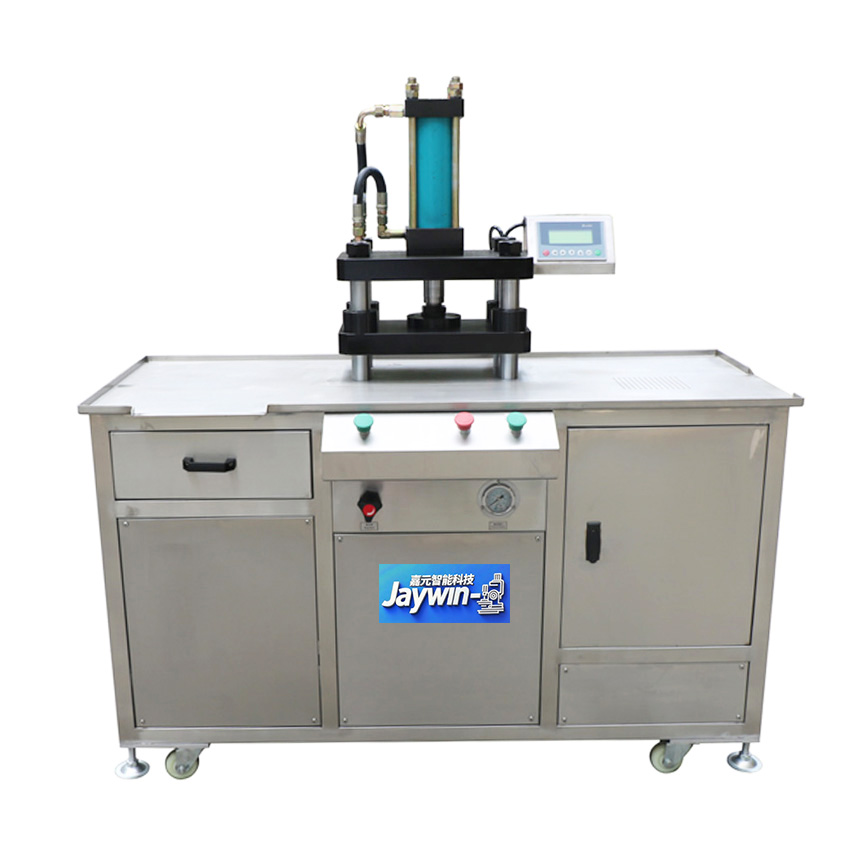
The laboratory hydraulic powder press machine is a precision-engineered device specifically designed for experimental production of cosmetic powders, including powder cakes, eye shadows, and eyebrow powders.
| Availability: | |
|---|---|
| Quantity: | |

Parameter | Specification |
Power Supply | Single-phase 220V (customizable to 3-phase 380V) |
Installation Requirement | 220V power supply |
Total Power | 1.8KW |
Pressure Range | 0~140KGF/CM⊃2; (maximum working pressure: 70KGF/CM⊃2;) |
Worktable Height | 780MM from the ground |
Production Capacity | Approximately 5~15 seconds/mold (depending on powder properties) |
Pressure Plate Size | 250mm (length) × 160mm (width) |
Dimension (L×W×H) | 700×510×1350MM |
Net Weight | Approximately 100kg |
Pressure Mode | Hydraulic |
A hydraulic-driven lab press optimized for high-density cosmetic powder compaction, featuring a dual-stage hydraulic pump that balances stable pressure output and efficient pressure buildup. Designed to address the unique challenges of compacting dense formulations (e.g., mineral foundations, waterproof bronzers) that require sustained pressure to avoid cracking or crumbling post-pressing. Its robust construction supports continuous 8-hour operation in lab environments, making it suitable for both iterative R&D testing and small-scale production of high-performance cosmetic powders.
Delivers pressure fluctuation ≤0.5MPa per 5 minutes, with a 100mm large-diameter piston that distributes pressure evenly across the powder surface—eliminating edge-to-center density variations common with smaller pistons. This even pressure distribution reduces the risk of post-pressing cracks, a major pain point for high-density formulations. Compared to smaller piston designs, it cuts pumping cycles by 60%, speeding up compaction without sacrificing stability.
The piston reciprocates to apply pressure during both upward and downward strokes, a key advantage for dense powders: this bidirectional action squeezes out trapped air from the powder bed, preventing voids that can cause product breakage. Operators can adjust the stroke speed (0.5-2mm/s) to match powder flowability, ensuring optimal compaction for low-flow mineral powders.
Offers manual and semi-automatic operating modes to suit diverse testing needs: manual mode for hands-on parameter adjustment during early-stage R&D, and semi-automatic mode with a 0-60 second adjustable pressure hold function. The pressure hold feature is critical for heat-sensitive ingredients (e.g., natural oils, active botanicals), as it allows for gentle, prolonged compaction without generating excess heat.
Built with a reinforced steel frame coated in anti-corrosion epoxy, resistant to chemical cleaners (e.g., isopropyl alcohol, lab disinfectants) commonly used in cosmetic labs. All hydraulic components are sealed with food-grade nitrile rubber to prevent oil leakage and ensure compliance with cosmetic safety standards. The press requires minimal lubrication, reducing maintenance downtime.
Specialized in compacting high-density cosmetic powders that require 18-24 tons of pressure, such as waterproof pressed foundations, long-wearing bronzers, and transfer-resistant face powders. The sustained hydraulic pressure ensures these products maintain structural integrity during shipping, handling, and daily use—addressing a top complaint from consumers of dense pressed products.
Enables comprehensive texture testing for long-wearing cosmetic products, including evaluations of powder adhesion (resistance to flaking), crack resistance (after 100+ opening/closing cycles), and oil absorption (to ensure color consistency after skin contact). These tests are critical for validating formulations before scaling to mass production.
Beyond cosmetics, it is compatible with pharmaceutical powders (e.g., oral disintegrating tablets) and ceramic materials, making it a versatile asset for labs with multi-disciplinary testing needs. For cosmetic-pharmaceutical hybrid products (e.g., SPF-infused pressed powders), it supports testing of both cosmetic texture and pharmaceutical ingredient stability.
Hydraulic models excel at sustained high pressure (18-24 tons) for dense compacts, making them ideal for formulations where structural integrity is prioritized. Servo-driven models, by contrast, offer finer pressure increments (0.01 tons) for delicate, low-density powders (e.g., translucent setting powders) where precision over maximum pressure is key. Hydraulic presses also have a higher peak load capacity (up to 30 tons) for occasional over-pressing tests.
The minimum sample size is 5g per press—critical for early-stage R&D, where raw materials (e.g., rare natural extracts, high-cost pigments) may be limited or expensive. This small sample size allows teams to test multiple formula variations with minimal material waste.
Routine maintenance is simple: monthly inspection of hydraulic oil level and clarity (oil should be replaced every 6 months or after 500 hours of operation) and annual replacement of hydraulic seals. No additional lubrication is needed, and the anti-corrosion frame requires only occasional wiping with a damp cloth—keeping maintenance costs low.
When you plan on shipping cosmetic machinery internationally, you need to understand how to choose the right shipping method, follow all regulations, and protect your equipment during transit. You must pay close attention to each step to avoid delays and unexpected costs. Jaywin Machinery stands out
Imagine you discover a new face cream or powder and wonder if it is safe for your skin. You want to trust that every product on the shelf meets strict standards. Quality Control in Cosmetic Cream and Powder Production Lines ensures this trust. You benefit from safe and effective products because com
Every factory layout brings its own challenges. You need equipment that adapts to your space and workflow. Jaywin Machinery delivers customized cosmetic machinery solutions, helping you reach higher productivity levels. Many companies have seen output rise by 30% and labor costs drop by almost half
You face a typical cosmetic powder production cost ranging from $50,000 to $250,000, depending on scale and quality targets. Understanding each cost component is critical for your cosmetic business. This breakdown of costs helps you plan and budget efficiently. You should focus on:Ingredient, labor,
Understanding shear stress cosmetics is vital if you want to create stable, high-quality cream formulations, especially for sensitive products. Shear stress cosmetics directly influences how your creams hold up during storage and use. Have you ever noticed cream separation or changes in texture afte
Image Source: pexelsYou want to know which filling machine will work best for your lip gloss production. The answer depends on several important factors. Many cosmetic manufacturing equipment options exist, but your choice should fit your production volume, flexibility needs, budget, and the quality
You play a key role in the fast-growing world of foundation cream manufacturing. The market continues to expand:The global foundation cream market reached $9.5 billion in 2023.Projections show growth to $14.8 billion by 2032, with a CAGR of 4.9%.The cosmetics foundation sector expects a 6.38% annual
A real-world cosmetic cream production line case study gives you a clear look into how factories actually work. You see the real challenges and solutions that shape daily production. By learning from Jaywin-machinery’s customer experiences, you discover how advanced machines and custom solutions lea
You can make your cosmetic production line use less energy by buying better machines and making your work steps better. Manufacturers who use energy efficient cosmetic equipment see many quick benefits:Lower production costs because they use less energy and make less wasteA smaller carbon footprint
You face unique challenges when moving from lab scale to production scale cosmetics. Achieving homogeneity, consistent particle distribution, and avoiding air inclusions can impact your final product. Careful planning and the right equipment ensure safety, product quality, and process efficiency. Ch
You need to choose the right mixing method for each cosmetic product. Dry mixing works best for powders, eyeshadows, and blushes. Wet mixing suits creams, foundations, and concealers. This decision affects texture, color payoff, and how well your product performs. Efficient mixing also saves time an
Image Source: pexelsYou create compact powder through a precise series of steps that each play a vital role in quality and safety. You start with high-quality, cosmetic-grade ingredients for safety and effectiveness. You grind and pulverize these materials to achieve a smooth texture and even applic
Choosing between a piston filling machine and a peristaltic filler can transform your cosmetics production line. The right equipment helps you match the viscosity of your creams and gels with the speed and accuracy you need. Jaywin Machinery leads the way in advanced filling solutions for cosmetic m
You can integrate powder filling and pressing machines into a complete production line with the right expertise. Jaywin Machinery helps you achieve seamless integration, ensuring you meet high standards in cosmetics manufacturing. Recent studies show that combining these technologies in a powder fil
You know that controlling temperature is important for good products. In a hot pour filling system, small changes in temperature can affect your formulas. These changes can make them look and feel different. Jaywin Machinery makes machines to help with these problems. You get the same results every
New technology is changing the way you press cosmetic powders. You see more companies worldwide choosing automatic and smart machines. Markets in Japan, Australia, South Korea, and Russia lead this trend. They invest in advanced automation and focus on eco-friendly processes. These changes help you
The most important factor when you choose PPGI steel supplier is proven reliability and product quality. If you select an unreliable supplier, you risk facing issues like hardness problems, bubbles in coatings, and surface pitting. These problems often result from poor heating conditions, foreign ma
Image Source: pexelsAre you ready to launch your own cosmetic powder brand? Choosing the right private label cosmetic equipment makes a huge difference in your success. Reliable machines help you:Create consistent, high-quality products for your customersMeet industry rules and avoid compliance head
You must prioritize proactive steps to prevent cosmetic cream production contamination. Every stage in your process demands strict attention to safety and product quality. Advanced machinery plays a vital role in minimizing risks and supporting high hygiene standards. By adopting best practices and
If you have a small lab or a boutique cosmetics brand, a manual eyeshadow pressing machine can help you save money. It also lets you make small batches easily. Bigger factories use automatic models. These machines make more products and need less workers. You should pick the machine that fits your g