
English


Views: 0 Author: Site Editor Publish Time: 2026-10-27 Origin: Site


Making shampoo bars and solid perfumes requires stage-based equipment for mixing, molding, cooling, and packaging. The machines differ because shampoo bars are surfactant-based, while solid perfumes are wax-and-oil-based. Shampoo bar lines rely on heated mixing buckets, silicone molds, quick-freezing platforms, wrapping machines, and curing racks. Solid perfume lines use wax-and-oil melters, four-head filling and freezing lines, compact-filling tools, and premium labeling equipment. Solid Cosmetics Manufacturing therefore follows two distinct equipment paths. Each stage shapes output quality and line speed. A side-by-side comparison shows where each set fits best, and formulation, batch size, and compliance needs guide the final choice.
Shampoo bars need heated mixers, silicone molds, and quick-freezing platforms.
Solid perfumes require gentle melters, precise fillers, and fast cooling lines.
Match equipment to your product type: surfactant bars or wax-and-oil blends.
Follow GMP and ISO standards to ensure safety and quality.
Scale equipment to your batch size and growth plans to control costs.

Shampoo bar production follows a clear equipment path. The line starts with heated mixing, moves through molding and rapid cooling, and ends with protective packaging. Each stage has specific machine options that fit different batch sizes and formulations.
The mixing stage melts and blends the surfactant base with butters, fatty alcohols, and other functional ingredients. A typical small-batch process melts the butters and fatty alcohol in a water bath, then removes the mixture and lets it cool. The operator measures the surfactant phase separately and combines it with the melted phase once the temperature drops to about 50 °C. Slow, thorough mixing continues until the batch reaches a dough-like consistency.
Jaywin Machinery's Cosmetic lipstick lip gloss liquid paste heating and stirring bucket offers a versatile option for this stage. The unit uses double-layer oil heating for uniform temperature control across the batch. Its operating range of 0–150℃ covers the full melting and blending window for shampoo bar bases. Adjustable spindle speed from 0 to 90 r/min gives operators precise control over shear and mixing intensity. Barrel volumes from 20L to 500L let producers scale from pilot batches to full production runs.
Once the base reaches the right consistency, the operator presses or pours it into molds. Rapid solidification and clean demolding determine cycle time and bar quality. Jaywin Machinery's Quick freezing platform for cosmetics, lipsticks and lip balms accelerates this stage. The platform solidifies paste products in 1–3 minutes and allows operators to set the refrigeration temperature to match the formulation. A timed refrigeration cycle keeps results consistent across batches.
Demolding follows cooling. Jaywin Machinery's Silicone molds for cosmetics, lipsticks and lip balms are taken off the machine handles 2–5 modules per minute and releases 1–10 pieces per set. The stainless steel construction suits continuous production environments.
Mold choice also matters. A representative bar mold carries a maximum temperature of 135°F, and warping may occur above 135–145°F. Operators pour melted soap at no hotter than 135°F, cool until hardened, and may place the mold in a freezer for 30 minutes for easier unmolding. Cold process bars then cure for 4–8 weeks after unmolding. These steps show why Solid Cosmetics Manufacturing pairs controlled heating with fast, repeatable cooling.
Packaging protects a shampoo bar from moisture pickup and gives the product its shelf presence. Solid bars absorb humidity from the air, so the wrapper acts as a barrier rather than a decoration. The packaging stage also shapes how the bar looks in retail displays. A well-integrated line moves bars from cooling racks to sealed, labeled units without manual handling gaps.
A shampoo bar wrapping machine forms a tight seal around each bar. Flow-wrap and shrink-wrap formats both suit solid bars, and the choice depends on the barrier film and the desired shelf look. The wrapper must keep the film taut across edges and corners. Loose folds let humid air reach the surface and soften the bar over time.
Labeling follows wrapping. A labeler applies batch codes, ingredient lists, and brand graphics at a consistent position. Accurate placement matters for retail compliance and for a clean shelf presentation. Jaywin Machinery's service process covers installation, operator training, and after-sales support when a producer integrates these units into a full packaging line.
Some producers carton wrapped bars for shipping and gift sets. A cartoner erects, fills, and closes the box at line speed. The machine must handle the bar's weight without crushing the wrapper seal. Cartoning also protects bars during transport and stacks neatly in storage.
Curing racks serve a different role. Cold-process bars need an airy, well-ventilated space to finish drying before packaging. Rack systems hold bars in single layers so air reaches every surface. Good airflow shortens the wait and reduces the risk of surface defects. Producers should match rack capacity to batch size and keep the curing area separate from humid production zones.
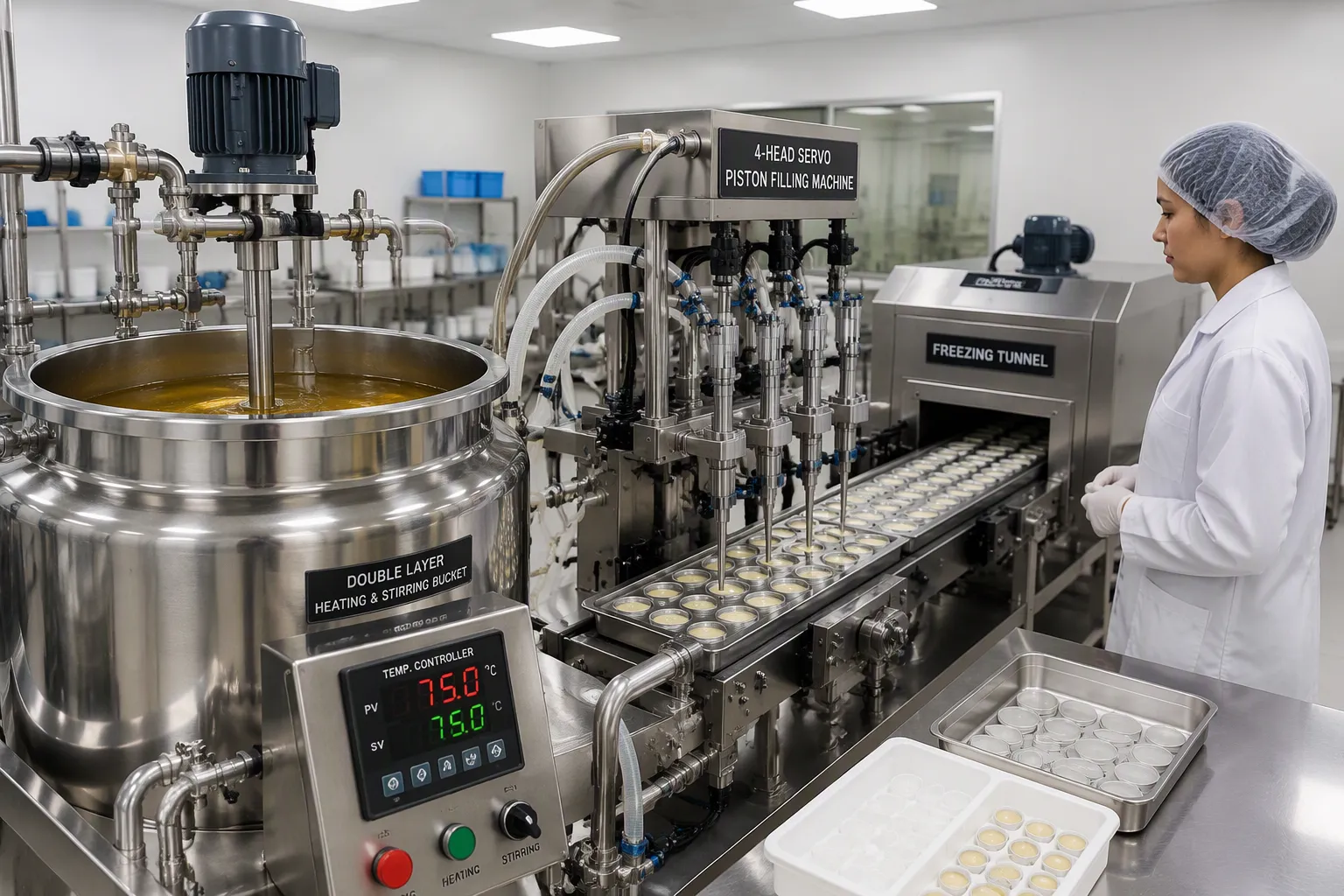
Solid perfume shares the same stage map as shampoo bars, yet the material behavior differs. A wax-and-oil base melts at a lower temperature and sets faster. The equipment path therefore shifts toward gentle melting, precise pour filling, and rapid chilling. Each stage still needs a machine matched to the formulation and the batch size.
The melting stage combines waxes, carrier oils, and fragrance into a clear, uniform blend. Overheating drives off volatile fragrance notes, so temperature control matters more here than in surfactant processing. Gentle, continuous stirring also prevents wax from scorching on the bucket wall.
Jaywin Machinery's Cosmetic lipstick lip gloss liquid paste heating and stirring bucket suits this wax-and-oil melting work. The double-layer oil heating design spreads heat evenly through the batch. An adjustable spindle speed of 0–90 r/min lets operators stir slowly during fragrance addition and faster during initial wax melting. Barrel volumes from 20L to 500L cover small artisan runs and larger production batches alike. The 0–150℃ range gives enough headroom for hard waxes without approaching the smoke point of delicate oils.
Solid perfume usually goes into compacts, sticks, or shallow pans. The fill must be accurate, and the set must be fast enough to hold the fragrance in place. Slow cooling can cause wax bloom or fragrance separation at the surface.
Jaywin Machinery's Four-head Cosmetic paste heating, filling and freezing production line combines these steps in one flow. The four-head servo piston system fills heated paste into molds or compacts with stable, quantitative dosing. A freezing tunnel follows the filler, and a reheat and capping stage finishes the cycle. The line handles 80–160 pieces per minute depending on fill volume and formula, and its 50L filling barrel supports continuous runs.
For smaller batches or separate chilling steps, Jaywin Machinery's Quick freezing platform for cosmetics, lipsticks and lip balms offers a flexible alternative. The platform sets paste products in 1–3 minutes, and operators can set the refrigeration temperature to suit each formula. A timed cycle keeps results repeatable from batch to batch.
Mold material and pour temperature also shape the outcome. Operators typically warm molds slightly before filling so the wax does not chill on contact. They then move filled molds to the chilling station without delay. This sequence keeps the surface smooth and the fragrance evenly distributed. Solid Cosmetics Manufacturing success at this stage depends on matching fill speed to cooling capacity, so neither step waits on the other.
Solid perfume packaging differs from shampoo bar packaging in one key way. The product sits in a small, reusable format, and the package itself carries much of the brand value. Filling accuracy and presentation quality therefore drive the equipment choice at this stage.
Small-format compacts and twist-up sticks demand precise dosing. A slight overfill pushes paste onto the rim, and the lid then smears the surface. An underfill leaves a visible gap that reads as a quality defect. Filling tools for this stage must handle a paste-consistency product at low volume with repeatable accuracy.
Jaywin Machinery's Cosmetic cream equipment offers a filling option for paste-consistency products. The line includes servo piston and gear pump mechanisms, and both designs deliver consistent dosing across a production run. Heating capability keeps the wax-and-oil blend fluid during filling, so the paste flows evenly into each cavity. Multi-color filling support also lets producers run tinted or layered solid perfume variants on the same equipment.
Compacting tools follow the fill. A light press settles the paste into the compact pan and removes air pockets. The operator then wipes the rim clean before the product sets. This sequence keeps the surface flat and the fill weight uniform.
Presentation packaging for solid perfumes emphasizes premium labeling and compact design. A solid perfume often sells as a gift or a personal accessory, so the label must sit squarely on a small surface and resist wear from handling. Pressure-sensitive labels with a matte or metallic finish suit this role. Precise applicator placement matters more here than on a large carton, because a crooked label is immediately visible on a pocket-sized compact.
Compact design also shapes the line layout. Producers often pair a labeling unit with a capping or sleeving station so the finished compact leaves the line ready for retail. Batch codes and ingredient text must remain legible at small print sizes. A quick visual check at the end of the line catches misaligned labels before cartoning.
Heating and stirring demands diverge first. Shampoo bar bases are surfactant-heavy and thick, so the mixer must move a dense paste without trapping air. Solid perfume blends are thinner wax-and-oil systems, and they need gentle, even heat to protect volatile fragrance notes. A machine with adjustable spindle speed serves both, yet the operator sets it very differently for each product.
Molding methods split along the same line. Shampoo bars usually take pressing or extrusion, which shapes a semi-solid mass under mechanical force. Solid perfumes take pour-and-freeze, where a heated liquid fills a compact and sets in place. Cooling speed follows the formulation. Wax-and-oil blends set quickly and reward a fast chilling step, while surfactant bars tolerate a slower, more controlled drop in temperature.
ISO 22716 GMP governs equipment design, installation, calibration, maintenance, and cleaning. The standard requires documented cleaning and maintenance schedules, periodic calibration where accuracy affects quality, and materials that do not react with cosmetic ingredients. It also prohibits repurposing cosmetics equipment for other uses. ISO 9001 covers general quality management, while ISO 22716 targets cosmetics manufacturing and adds contamination controls and microbial risk measures.
Feature | ISO 9001 | ISO 22716 |
|---|---|---|
Scope | Any industry | Cosmetics only |
Contamination controls | No | Yes |
EU market requirement | No | Yes |
Jaywin Machinery's service process supports GMP/ISO-aligned installation, training, and maintenance. Cost drivers include batch size, automation level, and customization, so a producer should scale the line to current output. Each equipment set fits its own product type best, and Solid Cosmetics Manufacturing planning should start from the formulation.
Shampoo bar lines run from heated mixing buckets through silicone molds and quick-freezing platforms to wrapping, labeling, and curing racks. Solid perfume lines pair wax-and-oil melters with four-head filling and freezing equipment, then finish with compact filling tools and premium labeling. Solid Cosmetics Manufacturing rewards a formulation-first view: surfactant bars need dense mixing and controlled cooling, while wax-and-oil blends need gentle heat and fast setting. Batch size and GMP/ISO compliance shape the final specification. The takeaway is simple. Match each production stage to the right machine type, and scale equipment investment to current output and realistic growth plans.
Jaywin Machinery's heating and stirring bucket handles both jobs. Double-layer oil heating spreads heat evenly, and the 0–150℃ range covers surfactant bases and wax-and-oil blends. Operators adjust spindle speed from 0 to 90 r/min to suit each formulation.
The four-head filling and freezing line sets paste products in a continuous flow and runs 80–160 pieces per minute, depending on fill volume and formula. For separate chilling, the quick freezing platform solidifies products in 1–3 minutes with a timed cycle.
Not ideally. Shampoo bars usually take pressing or extrusion, while solid perfumes take pour-and-freeze into compacts or sticks. Silicone molds and a quick freezing platform suit bar demolding, and the four-head line fits small-format perfume filling.
ISO 22716 covers cosmetics manufacturing and adds contamination controls and microbial risk measures. ISO 9001 covers general quality management across industries. Jaywin Machinery's service process supports GMP/ISO-aligned installation, training, and maintenance for either line.
Start from the formulation. Surfactant bars need dense mixing and controlled cooling, and wax-and-oil blends need gentle heat and fast setting. Batch size, automation level, and customization drive cost, so scale the line to current output and realistic growth.
Ready to spec a line? Contact Jaywin Machinery for a tailored proposal, or browse the cosmetic cream equipment range to match each stage to the right machine.


