
English


Views: 0 Author: Site Editor Publish Time: 2026-06-11 Origin: Site


Brazilian cosmetics brands must approach scaling production with careful planning to achieve quality, compliance, and market success. The color cosmetics market in Brazil shows strong growth, as seen below:
Year | Market Size (USD Billion) | CAGR |
|---|---|---|
2025 | N/A | |
2032 | 3.41 | 4.9% |
Brands face challenges such as fluctuating raw material prices and supply chain disruptions. Choosing the right machinery and partners, like Jaywin Machinery, helps overcome these barriers. A step-by-step approach tailored to Brazilian regulations supports effective scaling production.
Brazil's color cosmetics market is growing rapidly, with a projected market size of $3.41 billion by 2032. Brands should adapt to trends like premiumization and sustainability to capture consumer interest.
Choosing the right machinery, like those from Jaywin Machinery, is crucial for maintaining quality and efficiency in production. Brands should prioritize precision and local support to minimize downtime.
A resilient supply chain is essential for success. Implementing quality control measures and engaging with reliable suppliers can help brands manage costs and ensure timely production.
Compliance with regulations, such as RDC 907/2024, is vital for market entry. Brands must understand these requirements to avoid legal issues and maintain product safety.
Using a phased launch approach allows brands to test products and gather feedback before full-scale production. This strategy reduces risks and helps refine offerings based on market response.
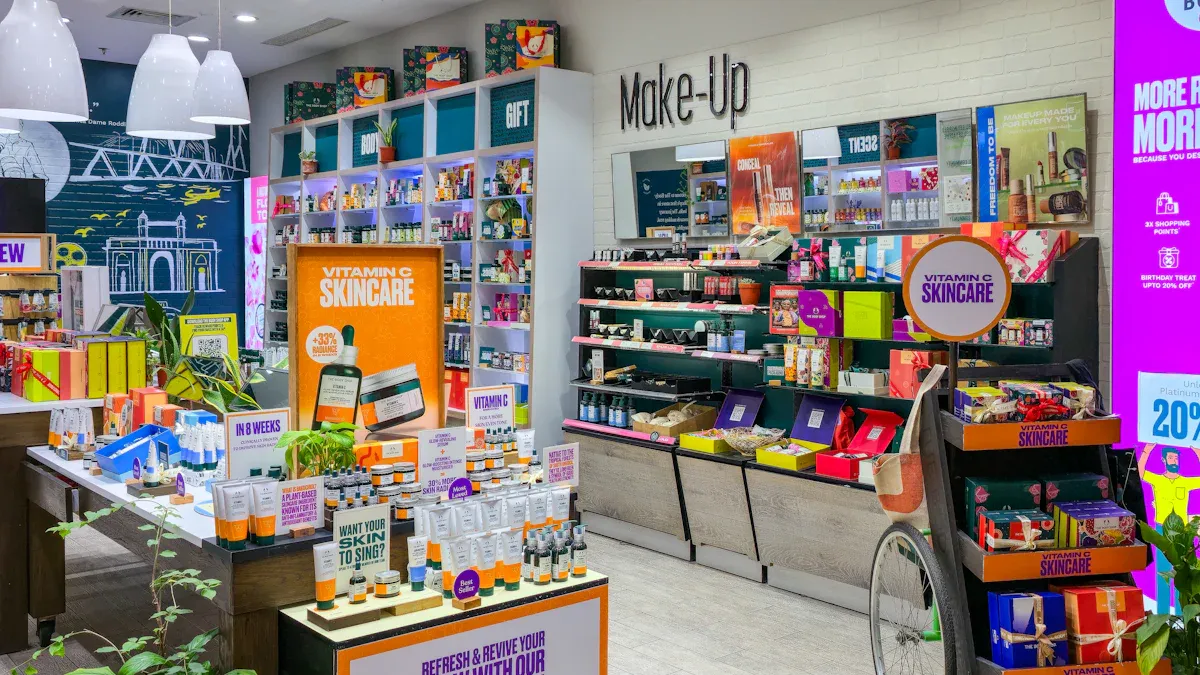
Image Source: unsplash
Brazil's color cosmetics market continues to evolve, shaped by dynamic consumer preferences and digital influence. Brands observe several key trends:
Digital platforms drive product discovery and engagement, especially among younger consumers.
Premiumization leads to increased demand for high-quality, innovative products.
Bold cosmetics reflect Brazil's cultural affinity for expressive beauty, with eye makeup and warm tones like coral and peach dominating sales.
Shiny lip glosses and vibrant stains gain popularity, supporting the trend toward colorful, sun-tanned appearances.
Sustainability and self-care influence purchasing decisions, with natural, organic, and clean-label products in high demand.
E-commerce and direct-to-consumer brands expand rapidly, offering convenience and personalized experiences.
Male grooming and gender-neutral cosmetics show rising interest, broadening the market base.
Brands that adapt quickly to these trends position themselves for success in the Brazilian color cosmetics market.
The women's segment remains the primary driver of color cosmetics consumption in Brazil, accounting for over three-quarters of the market. Urban working women invest in premium beauty products, influenced by cultural values and social media engagement. The market also reflects Brazil's diverse population, with consumers seeking personalized cosmetics tailored to unique skin tones and preferences. E-commerce growth enables brands to reach new demographics, including younger consumers and those interested in gender-neutral or male grooming products.
The dominance of the women's segment stems from Brazil's vibrant fashion industry and a strong cultural emphasis on self-expression through makeup.
Leading players in Brazil's color cosmetics market include Natura Cosméticos SA, Estée Lauder Brasil, Nelida do Brasil Comércio e Importação Ltda, Botica Comercial Farmacêutica Ltda, and Mary Kay do Brasil Ltda. These companies employ strategies such as sustainability-linked finance, local sourcing of bio-ingredients, and digital engagement through influencer partnerships. Local manufacturers benefit from policies encouraging domestic production, though regulatory compliance remains a challenge. ANVISA's increased scrutiny on labeling and ingredient safety raises production standards, requiring brands to invest in quality control and efficient machinery.
Company Name | Key Strategy |
|---|---|
Natura Cosméticos SA | Sustainability, local sourcing |
Estée Lauder Brasil | Digital engagement, premiumization |
Botica Comercial Farmacêutica Ltda | Local innovation |
Mary Kay do Brasil Ltda | Influencer partnerships |
Companies that prioritize sustainability, innovation, and compliance gain a competitive edge in Brazil's color cosmetics sector.
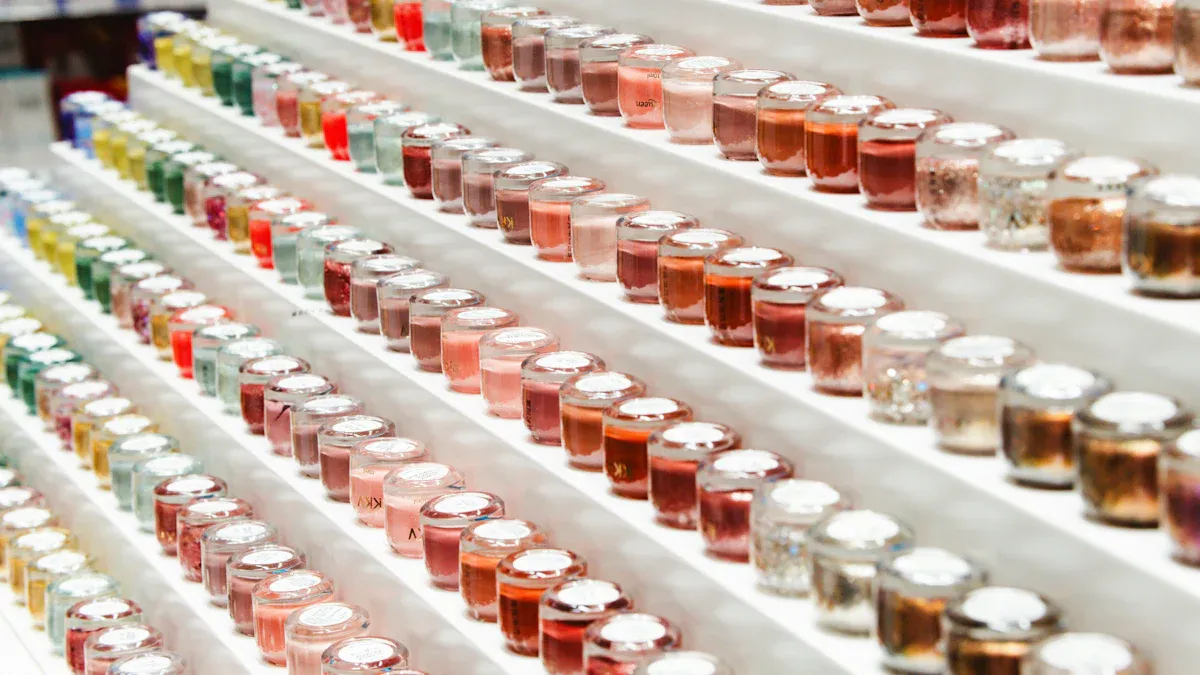
Image Source: unsplash
Selecting the right machinery forms the backbone of successful scaling production in Brazil’s color cosmetics sector. Jaywin Machinery stands out as a trusted partner, offering tailored solutions for both emerging and established brands. When evaluating equipment, manufacturers should focus on several key considerations:
Precision accuracy in automated filling, capping, and packaging lines ensures consistent product quality.
Integration with specific packaging specifications allows brands to meet diverse product requirements.
Local technical support guarantees minimal downtime and reliable machinery performance.
Jaywin Machinery addresses these needs with a comprehensive range of equipment. For example, the Dual Color Lipstick Filler enables brands to produce innovative, multi-toned lipsticks efficiently. The Lipstick Filling Machine and 12-Hole Lipstick Filling Machine support both small-batch and large-scale operations, adapting to changing market demands.
Jaywin’s service process begins with a detailed consultation, followed by proposal design, equipment production, and on-site installation. Their team provides training and after-sales support, ensuring Brazilian clients can scale production efficiently and flexibly. The company’s commitment to customization means each solution fits seamlessly into existing workflows, enhancing productivity and maintaining high standards.
Feature | Description |
|---|---|
Customizable equipment for small-batch and large-scale operations | |
Compliance | Designed to meet strict hygiene and regulatory standards |
Material Quality | Food-grade stainless steel (SUS304/316) for FDA and GMP requirements |
Efficiency | Advanced technology for high-precision results and reduced material waste |
Adaptability | Integrates into various production lines, improving quality and efficiency |
Jaywin Machinery’s expertise and robust support system empower Brazilian brands to navigate the complexities of scaling production in a competitive market.
A resilient supply chain is essential for timely and cost-effective color cosmetics production. Brands in Brazil can strengthen their supply chain by focusing on:
Implementing rigorous quality control measures to ensure products meet safety and efficacy standards, which builds consumer trust.
Engaging with contract fillers who specialize in cost-effective manufacturing, helping brands manage expenses while maintaining quality.
Understanding and adhering to local regulations, which is vital for successful market entry and ongoing operations.
To further mitigate risks as production scales, manufacturers can adopt these strategies:
Vendor-managed inventory (VMI) reduces excess stock and improves responsiveness to demand changes.
Controlling inbound logistics enhances visibility and collaboration, aligning inventory with real-time demand.
Freight consolidation improves asset utilization and lowers transportation costs by pooling shipments.
Optimizing packaging fosters better communication between marketing and logistics, impacting transportation efficiency.
By prioritizing these strategies, brands can ensure a stable supply chain that supports sustainable scaling production.
As demand increases, brands must prepare for rapid volume growth. Operational challenges often arise, especially in processes like emulsification. Manufacturers may struggle to create stable emulsions that protect heat-sensitive ingredients. Inadequate emulsification can cause phase separation, inconsistent textures, and reduced product efficacy. These issues can lead to higher rejection rates and inefficiencies, impacting brand reputation.
Jaywin Machinery’s solutions help address these challenges. Their equipment, such as the Servo Laboratory Powder Press Machine and Laboratory Baking Powder Press Machine, supports smooth scale-up from laboratory to production. These machines ensure consistent viscosity and stability, reducing the risk of product variation during scaling production.
Careful planning, combined with advanced machinery and a robust supply chain, positions Brazilian brands for long-term growth in the color cosmetics market.
Brazilian color cosmetics manufacturers must comply with RDC 907/2024, which sets the foundation for legal market entry and ongoing operations. This regulation, enforced by ANVISA, outlines requirements for pre-marketing approval, product notification, and AFE authorization. The table below summarizes the main requirements:
Requirement Type | Description |
|---|---|
Pre-marketing Approval | Needed for products listed in Article 34, such as sunscreens and antiseptic gels. |
Notification | Required for most color cosmetics not listed in Article 34. |
AFE Authorization | Mandatory for manufacturing, importing, exporting, storing, or distributing regulated products in Brazil. |
Recent regulatory changes have introduced flexible rules for artisanal cosmetics, reducing burdens for low-risk, handmade items. ANVISA’s regulatory sandbox also encourages innovation in personalized cosmetics by allowing temporary, flexible conditions for select projects. These initiatives foster creativity while maintaining public safety for industrialized products.
Good Manufacturing Practices (GMP) and ISO standards are essential for color cosmetics manufacturing in Brazil. These standards ensure consistent quality and safety throughout the production process. Key guidelines include:
ISO 22716: Provides comprehensive instructions for GMP in cosmetics, covering manufacturing, raw materials, quality control, documentation, storage, and distribution.
GMP: Ensures products are consistently produced and controlled, minimizing risks such as contamination or poor ingredient quality.
Manufacturers like Amara Cosmetics follow ISO 22716 and ANVISA’s GMP to guarantee product quality. They implement strict quality control processes, including raw material inspection, production monitoring, and finished product testing.
Evidence | Description |
|---|---|
Amara Cosmetics | Follows ISO 22716 and ANVISA's GMP for quality and safety. |
Quality Control Process | Involves raw material checks, process monitoring, and final product testing. |
Jaywin Machinery integrates advanced quality control features into its equipment, supporting Brazilian brands in meeting regulatory and industry standards. The following table highlights key features:
Equipment Feature | Contribution to Quality Control |
|---|---|
High-shear emulsifiers | Ensure uniform texture and batch stability. |
Automated filling machines | Deliver precise volume, reduce human error, and enhance consistency. |
Real-time quality monitoring | Detect deviations immediately, improving overall product reliability. |
Jaywin’s machines use SUS316L stainless steel and GMP-ready designs, aligning with both Brazilian and international requirements. These features help manufacturers maintain high standards, reduce risks, and build consumer trust in the competitive color cosmetics market.
Manufacturers in Brazil increasingly rely on advanced automation to streamline color cosmetics production. Jaywin Machinery offers solutions that integrate seamlessly into modern production lines. The fully automatic cosmetic lip balm liquid filling production line ensures precise ingredient measurement, temperature control, and mixing times. These features maintain consistent product quality and reduce fluctuations that can impact efficiency. Jaywin’s machines handle various packaging formats, including tubes, jars, and sticks. They achieve precise filling and consistent weight, resulting in faster turnaround times. CE, ISO, and GMP certifications guarantee compliance with international safety and quality standards.
Operators align machines for continuous operation. Skilled personnel reduce downtime and errors. Regular checks prevent blockages or misalignment, ensuring a long machine lifespan. The multi-color lipstick plate cosmetic paste heating filling machine supports simultaneous filling of multiple colors, enhancing production flexibility and efficiency.
Technology Type | Description |
|---|---|
Integrates intelligent automation and data-driven practices, boosting efficiency. | |
Automatic Barcode System | Tracks materials and packaging, ensuring accountability and transparency. |
IoT Technology | Connects devices for real-time data analysis and operational agility. |
Big Data Analysis | Uses IoT data to improve manufacturing and adapt to market demands. |
Automation enables manufacturers to scale production while maintaining high quality and operational stability.
Digital tools play a vital role in optimizing color cosmetics manufacturing. AI digital twins predict how process variables, such as mixing speed and temperature, affect product quality. Real-time monitoring catches deviations early, accelerating time-to-market and reducing material waste. These technologies enhance flexibility and scalability, integrating modern information and communication technologies for improved performance.
Manufacturers benefit from digital solutions that reduce product rework through rigorous documentation. Up-to-date work instructions and consistent monitoring ensure error reduction. Specialized software platforms streamline formulation management, batch tracking, quality control, and regulatory compliance. Automated batch calculations and inventory management minimize waste and streamline workflows, directly impacting operational costs.
Digital tools and automation together create a robust foundation for scaling production in Brazil’s color cosmetics sector.
Scaling color cosmetics production in Brazil requires careful financial planning. Companies must anticipate several risks that can impact budgets. Regulatory hurdles often arise when brands seek to access local biodiversity for raw materials. Limited availability of key inputs, such as propellant gas and certain petrochemical derivatives, can drive up costs. The sector faces a complex tax burden, which adds to financial uncertainty. Substantial tariffs on imported beauty products, especially those from China, further increase expenses and influence supply chain decisions.
Brands that recognize these risks early can build more resilient budgets and avoid unexpected financial setbacks.
Key financial risks to consider:
Regulatory challenges with local raw materials
Limited supply and high competition for essential inputs
Complex and high-value tax obligations
Tariffs on imported cosmetics and ingredients
Strategic sourcing helps Brazilian cosmetics manufacturers secure quality materials while controlling costs. Companies often diversify suppliers to reduce dependency on a single source. Local sourcing can minimize tariffs and shorten lead times. Building strong relationships with reliable vendors ensures consistent supply and better negotiation power. Brands also benefit from monitoring global price trends for raw materials, which helps them make informed purchasing decisions.
A proactive sourcing strategy supports stable production and protects profit margins during market fluctuations.
Operational cost control plays a vital role in scaling production efficiently. Manufacturers can gradually upgrade equipment to match demand growth, avoiding large upfront investments. Collaboration with industrial engineers or experienced contract manufacturers brings valuable expertise to the scale-up process. Flexible, modular manufacturing systems allow quick adaptation to new product lines or SKUs. Lean manufacturing principles help reduce waste and defects, improving overall efficiency.
Companies use inventory management software integrated with ERP systems for real-time tracking. Accurate demand forecasting, achieved through close collaboration with sales and marketing teams, prevents overproduction. Just-in-Time (JIT) inventory systems optimize stock levels and reduce holding costs.
Gradual equipment upgrades
Expert collaboration for scale-up
Modular manufacturing systems
Lean manufacturing to cut waste
Real-time inventory management
Improved demand forecasting
JIT inventory optimization
Effective cost control ensures sustainable growth and long-term competitiveness in Brazil’s color cosmetics market.
A phased launch approach helps Brazilian color cosmetics brands manage risk and optimize resources. Companies often start with a pilot batch or limited regional release. This strategy allows teams to validate production processes and packaging performance. They can monitor initial sales and address any operational issues before expanding distribution. Jaywin Machinery supports this approach by offering modular equipment that adapts to different production volumes. Brands can scale up from small-batch to mass production without major disruptions.
Phased launch steps:
Produce a pilot batch for internal testing and regulatory review.
Release products in select regions or through specific retail channels.
Collect early sales data and monitor consumer reactions.
Adjust production parameters as needed before a full-scale rollout.
A phased approach reduces costly mistakes and builds confidence in the production system.
Continuous feedback and iteration drive product improvement. Brands gather insights from consumers, retailers, and quality control teams. They use this information to refine formulations, packaging, and marketing strategies. Jaywin Machinery’s flexible equipment enables quick adjustments to filling volumes, mixing speeds, or packaging formats. This adaptability supports rapid response to market feedback.
Key feedback sources:
Customer reviews and social media comments
Retailer and distributor reports
In-house quality control data
Brands that act on feedback can enhance product quality and strengthen their market position.
Market response determines the pace and direction of scaling production. Strong sales and positive feedback signal readiness for broader distribution. Brands may increase production shifts, add new SKUs, or expand into new regions. Jaywin Machinery’s scalable solutions allow manufacturers to boost output efficiently. They can add new modules or upgrade existing lines with minimal downtime.
Market Signal | Recommended Action |
|---|---|
High demand | Increase production volume |
New trends emerging | Launch additional variants |
Regional success | Expand distribution network |
Responsive scaling ensures brands meet demand without overextending resources.
Scaling production in Brazil’s color cosmetics market requires careful planning, regulatory compliance, and advanced technology. Jaywin Machinery provides tailored solutions that support efficiency and adaptability. Brands benefit from robust equipment, expert support, and scalable systems.
Invest in quality machinery for long-term growth.
Maintain strict compliance and embrace automation.
Brazilian brands seeking reliable production solutions should contact Jaywin Machinery or explore innovative equipment today.
Brazilian brands face strict regulations, supply chain disruptions, and high competition. They must ensure product quality, meet ANVISA requirements, and adapt quickly to market trends. Reliable machinery and strong technical support help overcome these challenges.
Jaywin Machinery designs equipment with GMP and ISO standards in mind. Their machines use SUS316L stainless steel and feature easy-to-clean surfaces. This helps brands meet Brazilian and international safety requirements.
Yes. Jaywin Machinery offers modular solutions. Brands can start with small-batch machines and scale up to high-volume lines as demand grows. This flexibility supports phased launches and market expansion.
Jaywin’s automated lines improve filling accuracy, reduce labor costs, and minimize errors. Real-time monitoring and digital controls ensure consistent quality. Automation also speeds up production and supports rapid market response.
Jaywin Machinery provides fast installation and thorough training. Most clients see full operational readiness within weeks. Their support team remains available for ongoing assistance and troubleshooting.


