
English


Views: 0 Author: Site Editor Publish Time: 2025-12-11 Origin: Site


Meta description: Discover effective Al-Mg-Mn roofing installation tips, avoid common issues, and ensure long-term performance. Trust Jinlisheng for quality roofing materials.
When you start an Al-Mg-Mn roofing installation, you need to focus on each step for best results. Proper installation keeps your roof strong, prevents leaks, and adds years to its life. You should avoid mistakes that can lead to water damage or early wear. Jinlisheng brings years of experience and high standards to every coated sheet material, helping you get a roof that stands the test of time.
Choose the right Al-Mg-Mn alloy for your roofing project. Consider factors like strength, corrosion resistance, and cost-effectiveness to ensure long-lasting performance.
Inspect and prepare the substrate thoroughly before installation. A smooth, even surface prevents leaks and extends the roof's lifespan.
Select high rib height plates for better wind resistance and water drainage. This choice enhances the structural integrity of your roof.
Use quality materials like Jinlisheng's Hot-dipped Aluminum Zinc Steel for superior corrosion resistance. This choice is crucial for roofs in harsh environments.
Perform regular inspections and maintenance on your roof. This practice helps catch issues early and prolongs the life of your roofing system.
When you plan an Al-Mg-Mn roofing installation, you need to choose the right alloy grade for lasting performance. The Al-Mg-Mn alloy (AlMg1Mn1) stands out for its strength, weather resistance, and easy processing. This makes it a reliable choice for roofing in many environments.
Key factors to consider when selecting your alloy include:
Water leakage prevention
Aesthetics
Insulation performance
Long lifespan
Cost-effectiveness
Architectural coordination
Adaptability to thermal expansion and contraction
You should also pay attention to the thermal expansion of aluminum sheets. Aluminum expands about twice as much as steel. To avoid warping or cracking, use a floating or movable fixing system. This allows the roof panels to expand and contract freely.
Corrosion resistance is another critical factor. Al-Mg-Mn alloys show excellent performance in harsh environments. For example, in salt spray tests, alloys like 5083 and 5052 have low corrosion rates, which means they can withstand coastal or industrial conditions.
Alloy Type | Corrosion Rate (mm y−1) | Test Duration | Environment |
|---|---|---|---|
5083 | 0.2 | 30 days | Salt spray |
5083 | 1.3 | 2 days | 5% salt spray |
5052 | 0.558 | 2 days | 5% salt spray |
Jinlisheng offers coated sheet materials that enhance the performance of your Al-Mg-Mn roofing installation. You benefit from products with:
Zinc-coated base layers for strong corrosion resistance
Long-lasting durability, with PPGI sheets lasting 20–30 years
A wide range of colors and finishes for better aesthetics
Organic coatings that improve thermal insulation
Eco-friendly materials that are fully recyclable
Jinlisheng’s commitment to quality ensures your roof remains strong, attractive, and cost-effective for years. You can trust their products to meet the demands of modern construction and provide reliable protection in any climate.
Choosing the right plate type and rib height is essential for Al-Mg-Mn roofing systems. You need to match the plate to your building’s structural needs. Rib height affects water drainage and wind resistance. Lower rib heights, like 25mm, may reduce load capacity and wind resistance. Higher rib heights, such as 65mm, improve structural integrity and help your roof withstand strong winds.
Plate Type | Rib Height | Thickness Range | Waterproof Features |
|---|---|---|---|
Low Standing Edge | 25mm | 0.7mm - 1.0mm | Requires additional waterproof measures |
High Standing Edge | 65mm | 0.9mm - 1.5mm | Outstanding waterproof performance |
Common Combination | 35mm/45mm | 0.9mm or 1.0mm | Effective coverage of 600mm width |
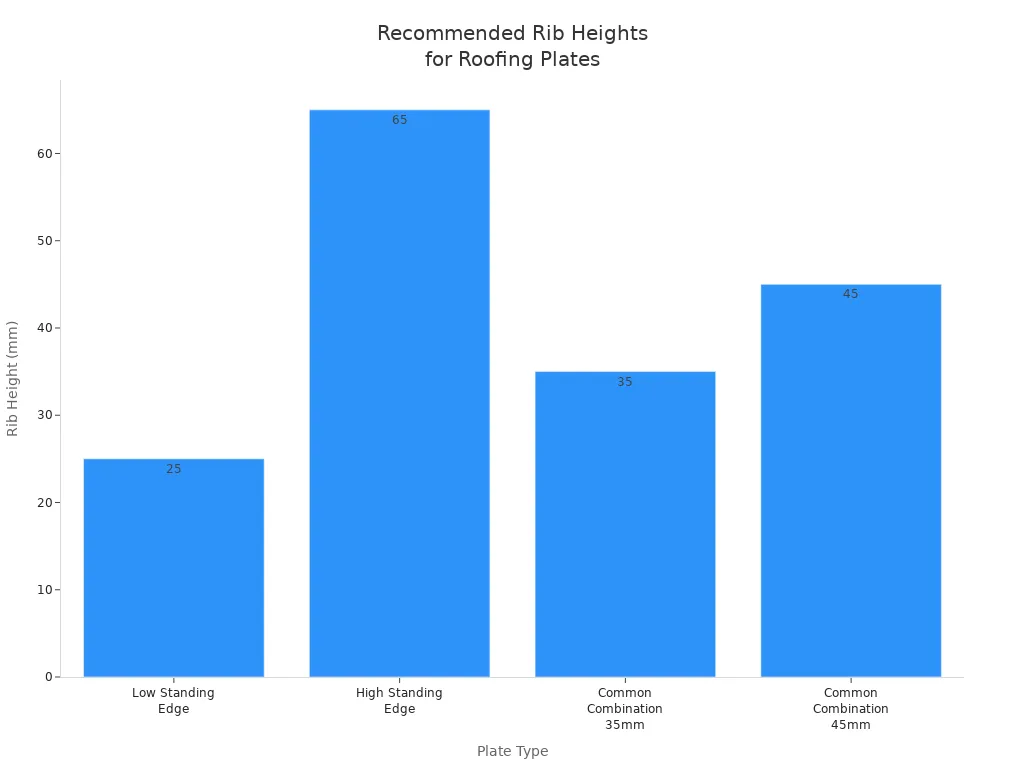
Tip: For large buildings or windy regions, select high standing edge plates to maximize durability and leak prevention.
You can boost your roof’s lifespan and performance by using Jinlisheng Hot-dipped Aluminum Zinc Steel. This material resists corrosion up to six times better than standard galvanized steel. It works well in demanding environments, including coastal areas and industrial zones.
Material | Corrosion Resistance |
|---|---|
Hot-dipped Aluminum Zinc Steel (Aluzinc) | 2 to 6 times better than galvanized steel |
Traditional Galvanized Steel | Standard zinc coating |
Benefit | Description |
|---|---|
Superior Oxidation Resistance | Extends the service lifespan of a steel roof by up to four times that of galvanised steel. |
High Solar Reflectance | A roof with an Al-Zn coating has an SRI value almost double that of one with a galvanised coating. |
Aluzinc is robust and suitable for roofs, flues, and ventilation shafts.
You can find more details on Jinlisheng Hot-dipped Aluminum Zinc Steel.
SMP Coated PPGI offers excellent weather resistance for Al-Mg-Mn roofing. The silicone modified polyester coating resists sunlight and powdering. You get strong color retention and heat resistance. The coating lasts 12 to 15 years, even in harsh climates.
Property | Description |
|---|---|
Heat Resistance | Enhanced due to silicone modification |
Durability | Superior compared to standard polyester |
UV Resistance | Good performance under intense sunlight |
Weather Resistance | Effective against extreme weather conditions |
Best Use | Roofing in hot climates and industrial buildings |
Service life for SMP coatings ranges from 12 to 15 years.
You can learn more about Jinlisheng SMP Coated PPGI.
By selecting the right plate type, rib height, and advanced Jinlisheng materials, you ensure your Al-Mg-Mn roofing system delivers superior durability and weather protection.
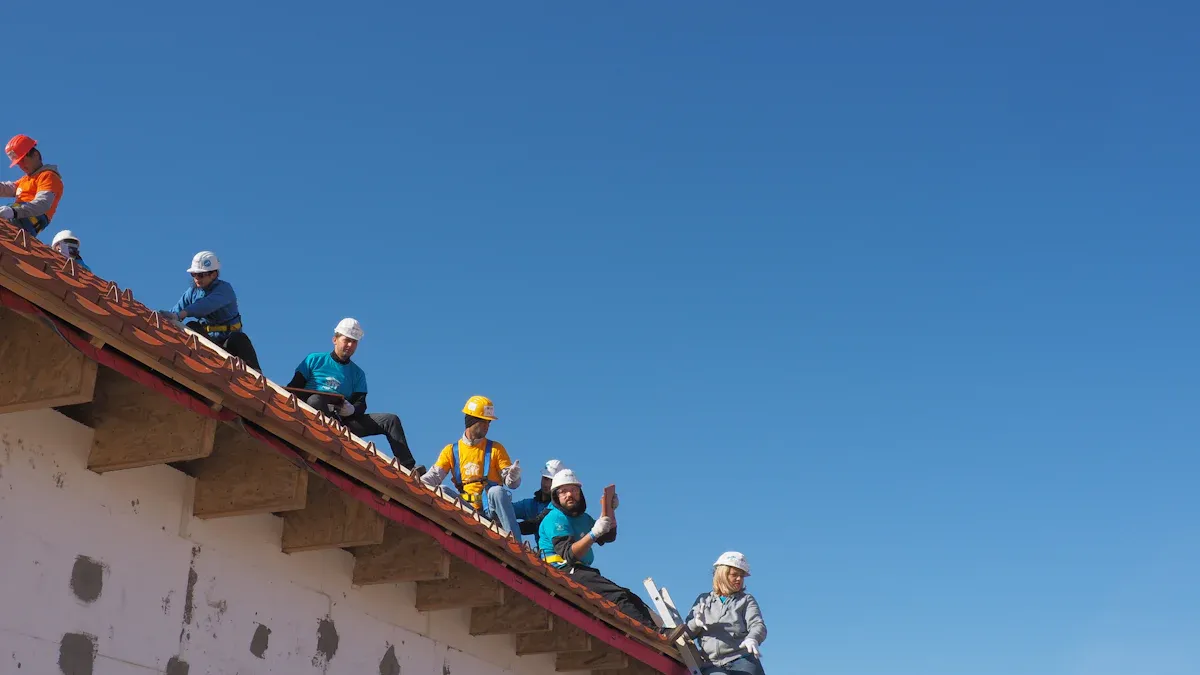
Image Source: unsplash
You need to start every Al-Mg-Mn roofing installation by checking the substrate. A smooth, even surface forms the foundation for a durable roof. If you find uneven areas, inadequate slopes, or structural irregularities, you risk water ponding and leaks. These flaws can also cause stress on the roofing system, leading to cracks or delamination.
Inspect for surface flatness and proper slope.
Check for any weak spots or gaps in support.
Remove debris, dust, and moisture before you begin.
Repair imperfections to ensure strong adhesion for insulation and membrane layers.
Tip: A well-prepared substrate prevents future problems and extends the life of your Al-Mg-Mn roofing installation.
After preparing the substrate, you install the support system. T-shaped bearings provide the main support for the roof panels.
Place supports at intervals based on panel size and load requirements.
Secure each bearing firmly to avoid movement during thermal expansion.
Align all supports to keep the roof level and stable.
You should use high-quality materials for supports. Jinlisheng’s Hot-dipped Aluminum Zinc Steel offers excellent corrosion resistance, making it ideal for this step. Proper support installation ensures the panels stay in place and perform well under wind or snow loads.
Next, you process and place the Al-Mg-Mn panels.
Cut panels to the correct length and shape using precise tools.
Handle panels carefully to avoid scratches or dents.
Lay out panels according to the design plan, starting from the eaves and moving upward.
Common mistakes during this step include skipping substrate checks, not allowing for thermal movement, and losing alignment. You can avoid these by:
Inspecting the substrate before placing panels.
Identifying fixed and sliding points to let panels expand and contract.
Snapping chalk lines to keep panel widths and alignment consistent.
Following manufacturer guidelines for panel laps and transitions.
Note: Always review details for valleys, penetrations, and flashings to manage water flow and prevent leaks.
You secure the panels using mechanical locking and concealed fasteners. This step is critical for the strength and weather resistance of your Al-Mg-Mn roofing installation.
Fastener Type | Panel Width | Seam Height | Pros | Cons | |
|---|---|---|---|---|---|
1" Mechanical Lock | Concealed | 17" or 13" | 1.0" | Excellent vertical rib strength, great for low slope roofing | Not suitable for siding, interior, or soffit |
2" Mechanical Lock | Concealed | 17" or 13" | 2.0" | Stronger for cold-weather environments | Difficult to install and replace |
Use the correct lock type for your climate and building needs.
Fasten panels securely but allow for some movement to handle thermal expansion.
Concealed fasteners protect against leaks and improve the roof’s appearance.
Flashing and lap handling protect your roof from water ingress. You need to pay close attention to these details.
Choose quality materials for flashing and laps. Durable materials prevent moisture problems.
Follow the manufacturer’s instructions for each product. This ensures the system performs as designed.
Use correct overlaps. Proper shingle overlaps direct water away from the roof and wall system.
Proper sequencing with a shingle overlap at all intersections is one of the most critical steps to ensuring moisture flows down and away from the wall system.
Flashing is essential at roof-to-wall connections and around penetrations. It keeps water out of vulnerable areas and helps water drain off the roof. Always check that flashing is installed tightly and overlaps are consistent.
By following these steps, you create a strong, weather-resistant Al-Mg-Mn roofing installation. Jinlisheng’s advanced materials and your careful attention to detail will help you achieve a roof that lasts for decades.
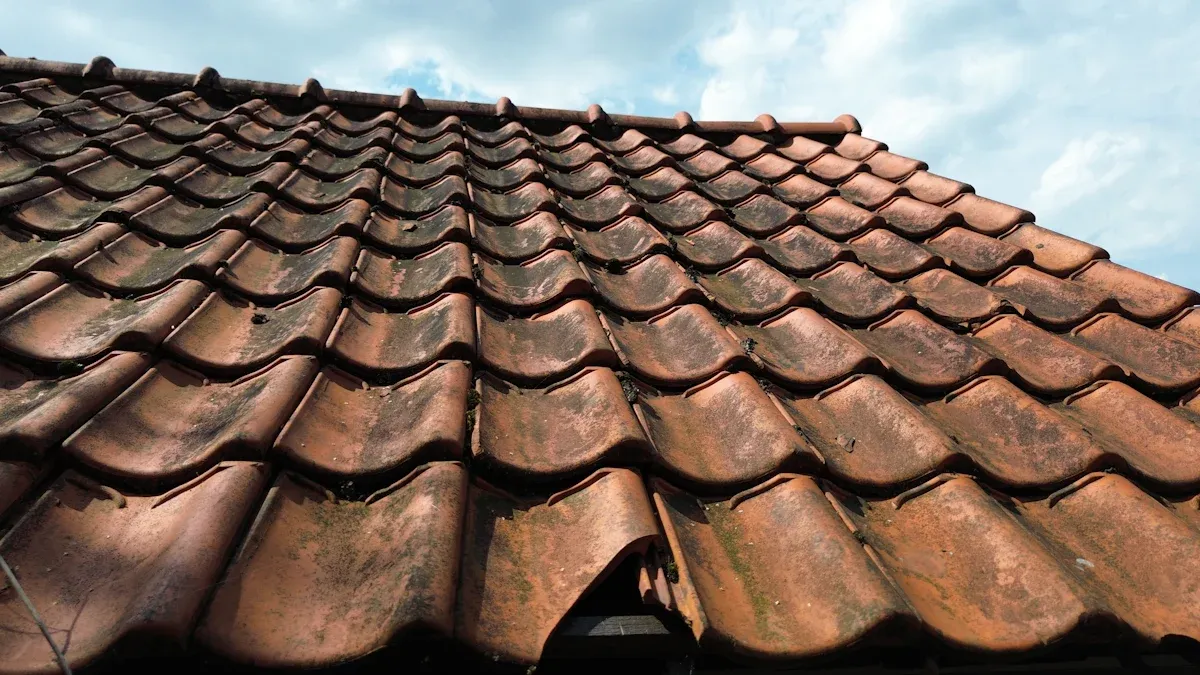
Image Source: unsplash
Mistakes during installation can affect the strength and lifespan of your roof. You need to watch for these common errors to avoid costly repairs.
Skipping a thorough substrate inspection can cause major problems. If you do not check for flatness or slope, you may see visible waviness in the metal surface. This often means you must remove panels and start over. Always inspect for weak spots, gaps, and debris before you begin.
Tip: A smooth, clean substrate helps prevent leaks and ensures strong adhesion.
Mistake | Description |
|---|---|
Failing to inspect the substrate can lead to visible waviness in the metal surface, requiring removal for correction. | |
Not Accounting for Thermal Movement | Improper alignment of clips can cause stress in panels, leading to distortion and fatigue over time. |
Fastener placement and panel alignment play a big role in roof performance. If you lose modularity during installation, errors can multiply. Misaligned seams may force you to remove several panels. Not accounting for thermal movement can cause stress and fatigue in the panels.
Use the correct fasteners for your panel type.
Align panels carefully to keep seams straight.
Allow for expansion and contraction to avoid distortion.
Flashing protects your roof from water. Poor installation practices, such as rushing the job, can lead to early flashing failure. Deterioration often starts near vents and pipes where water flow changes. Improper flashing can cause water infiltration, mold growth, and even structural damage.
Pay close attention to valleys, penetrations, and transitions.
Shape flashing to manage water flow, not just seal gaps.
Use quality materials and follow manufacturer instructions.
Note: Small deviations in panel laps can create leak points. Always check overlap and sealant placement.
Handling and transporting roofing materials require care. Heavy and awkward panels can cause back strains and muscle sprains. Sharp edges and hot surfaces pose risks of punctures and burns. Workers may face hazardous chemicals during handling.
Train your team in safe lifting and moving techniques.
Use protective gear to avoid injuries.
Store panels properly to prevent damage.
Safety first: Inadequate training and poor ergonomics can lead to accidents and injuries.
By avoiding these mistakes, you help ensure a strong, leak-free roof that lasts for years.
You can extend the life of your Al-Mg-Mn roofing by choosing the right protective coatings. These coatings form a dense aluminum oxide film that blocks oxygen and moisture. This barrier stops rust and slows down wear. Coatings like PVDF and polyester protect your roof from acid rain and UV rays. The aluminum oxide layer even repairs itself if scratched, so your roof stays protected for years. In coastal areas, marine-grade aluminum alloys give you decades of service. Al-Mg-Mn alloys resist corrosion much better than ordinary aluminum or stainless steel because of their special passivation layer.
Tip: Always select coatings that match your local climate and environmental conditions for the best results.
Regular inspection and cleaning keep your roof in top shape. You should follow these steps:
Inspect your roof twice a year, in spring and fall. Look for cracked panels, rusted flashing, or exposed fasteners.
Keep gutters and downspouts clear. This prevents water from backing up and causing leaks.
Trim overhanging branches. This stops branches from scraping the roof and keeps debris away.
Repair any damage right away. Fixing small problems early saves you from bigger repairs later.
Schedule professional maintenance. Experts can spot hidden issues and check ventilation, sealants, and fasteners.
Routine care gives you many benefits:
You catch leaks and damage early.
Cleaning removes moss and dirt, which helps your roof last longer.
A clean roof looks better and can raise your property value.
Regular cleaning improves energy efficiency by keeping insulation working well.
Maintenance reduces the need for costly repairs and replacements.
You can boost safety and durability by using Jinlisheng patterned galvanized steel in your roofing system. This product features raised patterns like diamonds and dots, which increase friction and reduce slip risks. The zinc coating protects against rust, even in harsh weather. The lightweight design makes installation easy and safe for workers. Patterned galvanized steel works well for walkways, stairs, and areas where you need extra grip.
Feature | Benefit |
|---|---|
Anti-slip patterns | Prevent slips and falls |
Strong zinc coating | Resists corrosion and extends lifespan |
Lightweight | Easy to handle and install |
High yield strength | Withstands heavy use and harsh weather |
Jinlisheng’s patterned galvanized steel helps you create a safer, longer-lasting roof. You can learn more about this product on the Jinlisheng Patterned Galvanized Steel Sheet page.
Remember: Investing in quality materials and regular care keeps your Al-Mg-Mn roof strong, safe, and beautiful for years.
You can achieve a durable, leak-free roof by following best practices and paying attention to each installation step. Regular inspections and proper maintenance help you avoid common issues and extend your roof’s lifespan. Jinlisheng provides high-quality materials and expert support for your next project. Ready to upgrade your roofing system? Contact Jinlisheng or explore our product range today!
You get strong corrosion resistance and durability. The alloy stands up to salt, rain, and wind. Jinlisheng’s coated sheets add extra protection, making your roof last longer in coastal or industrial areas.
You should inspect your roof twice a year. Check for damage, loose panels, and blocked gutters. Regular inspections help you catch problems early and keep your roof in top condition.
Yes, you can. Patterned galvanized steel from Jinlisheng provides anti-slip safety. Raised patterns help prevent falls. The zinc coating protects against rust, making it ideal for roof walkways and stairs.
You should install flashing and laps carefully. Use quality materials from Jinlisheng. Follow manufacturer instructions. Proper overlaps and tight seals keep water out and protect your building.
You need to match the coating to your climate. PVDF and SMP coatings from Jinlisheng resist UV rays and acid rain. These coatings help your roof stay strong and look good for years.


